Haunting White Images

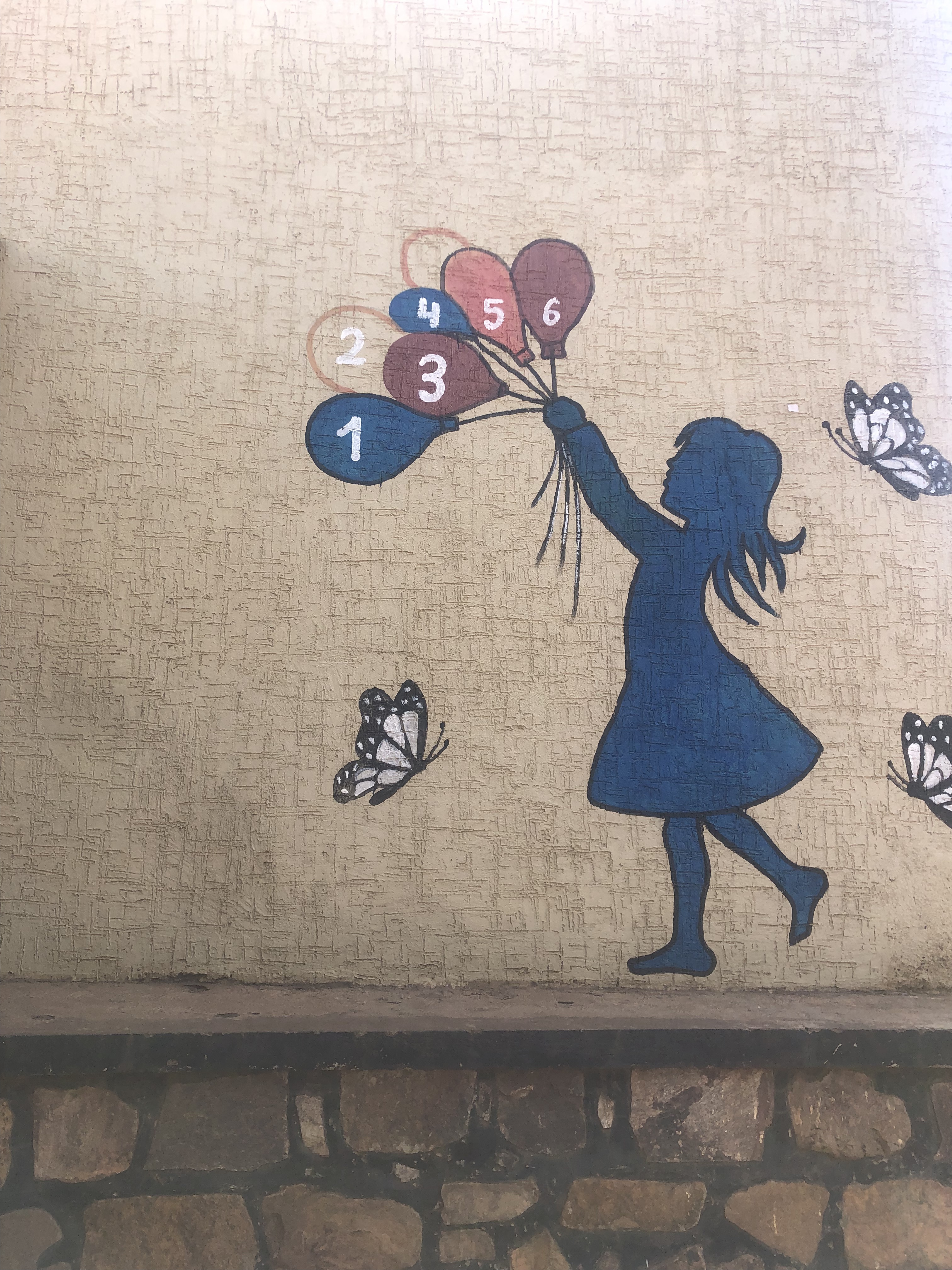
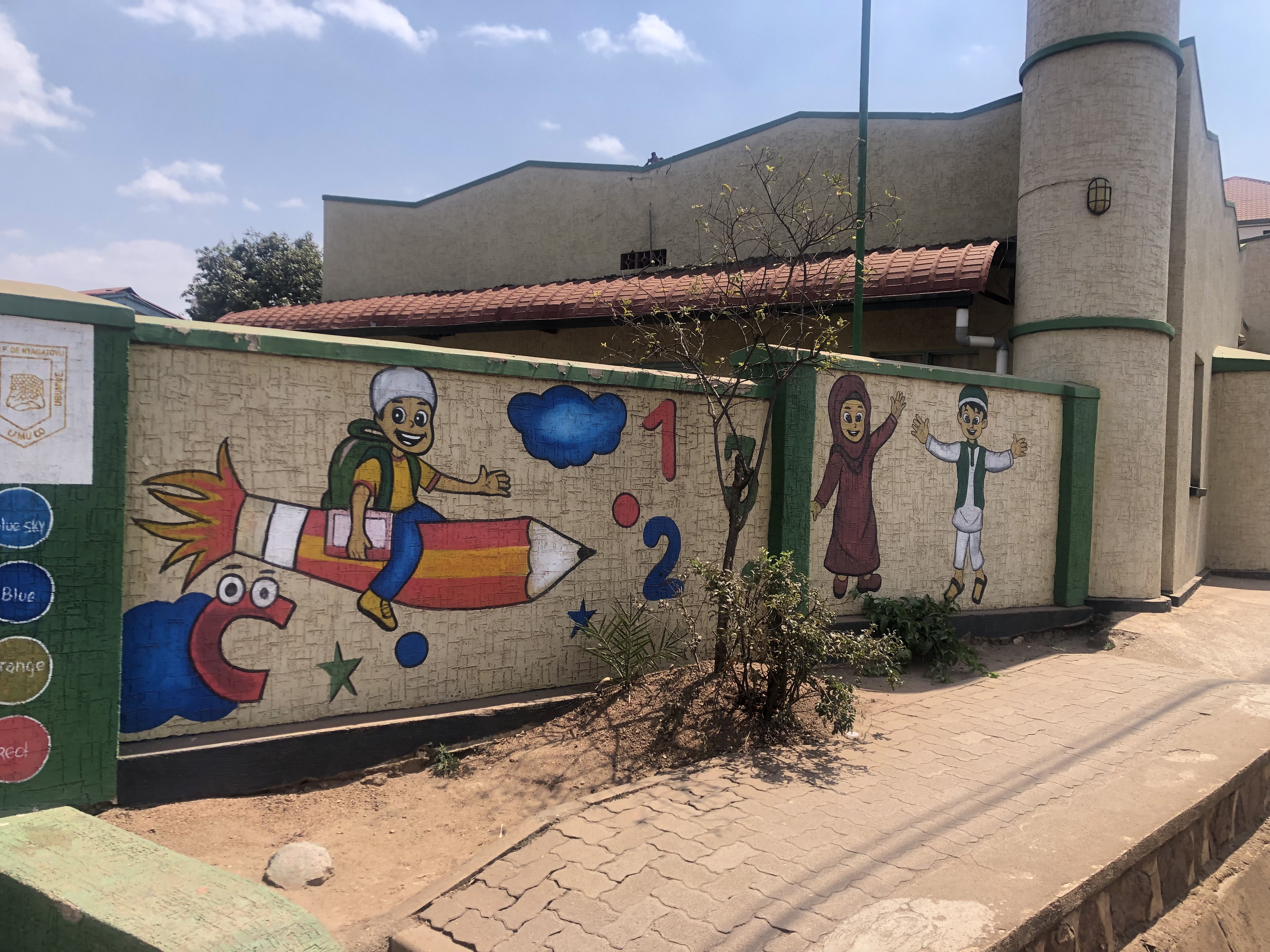
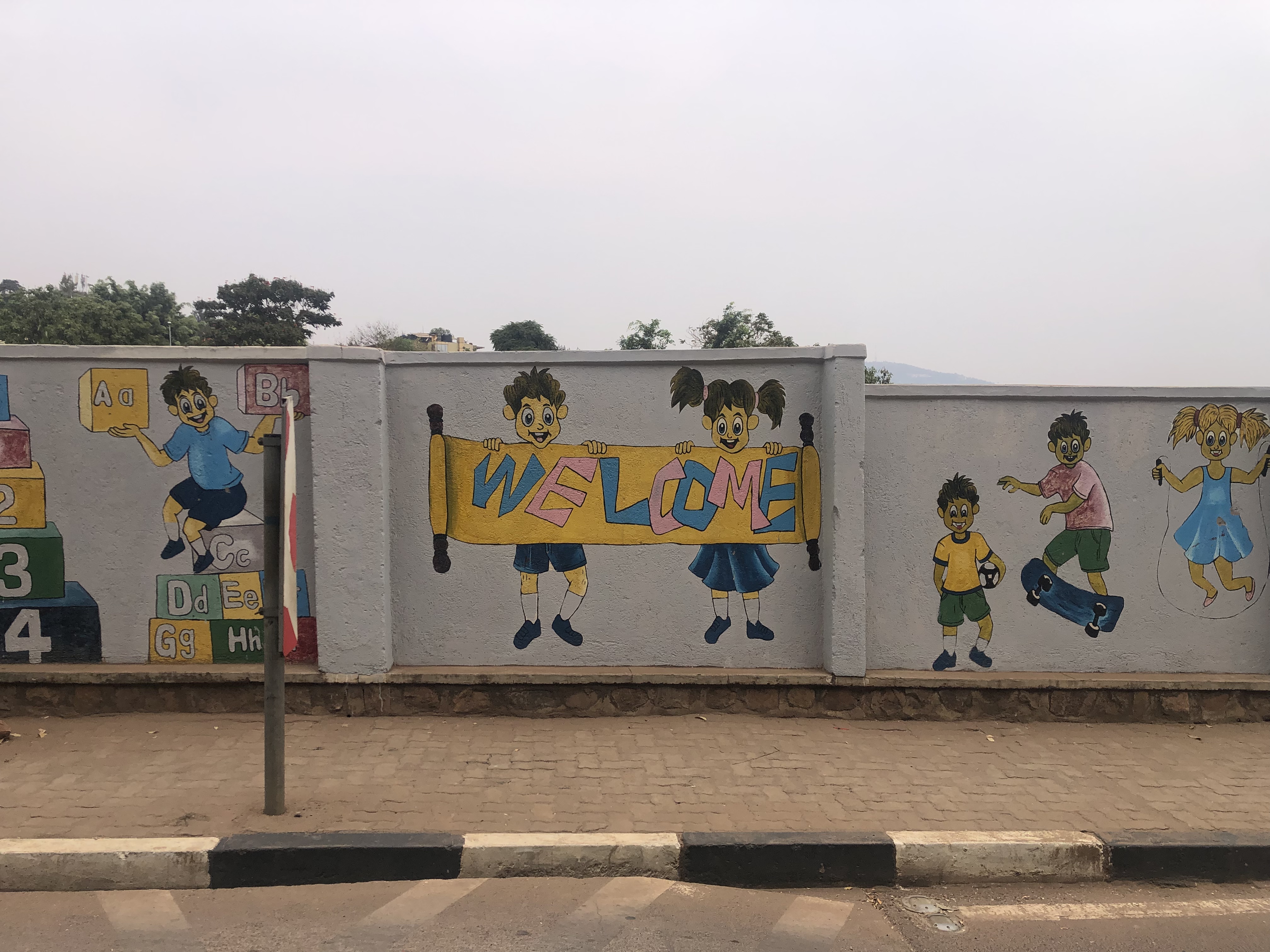
There’s something about the American phrase Representation Matters that doesn’t really resonate in Africa. In Kigali, Rwanda for example, there is a surprising lack of Black children on the murals of the nursery and primary schools. The depictions are of smiling Chinese kids, White kids in front of a welcome sign, Middle Eastern children with turbans on their heads, Indian kids too, but no Black children (Ok maybe there will be one token Black child on a mural with 10-15 kids). Inside the actual institutions, however, there are nothing but little Black learners. It baffles the hell out of me, but the Africans that I have spoken to about this do not take notice and generally don’t care.

About a month ago as I was coming back to Kampala from The Source of the Nile Tour in Entebbe, Uganda I decided to ask my driver about this erasure of blackness. He could barely conceal his irritation. To him I may as well have been a child asking, why is the sky blue?

“It’s just a painting,” he said.
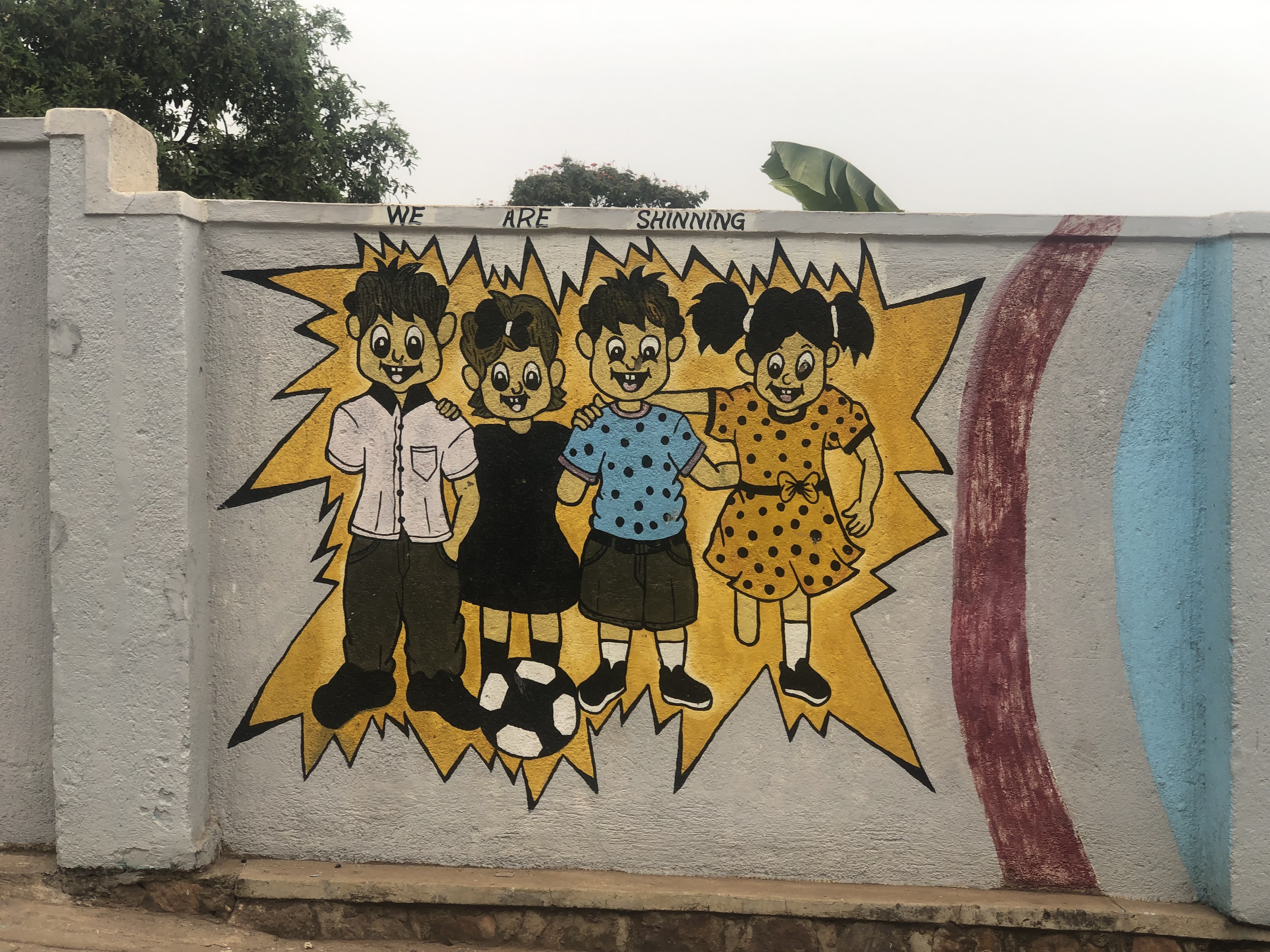
“Yes, I know, but the kids see it every day on the way to school. I’m sure that it makes them feel unworthy to not see anyone that looks like them on the school that they go to.”

He looked around outside as he searched his brain for an answer that would best explain the Ugandan position on such matters.

“It’s like that,” he said as he pointed inside of a clothing boutique store.

 “All the mannequins in there are white. The people who shop there are black, but the mannequins are white. It’s just how it is.”

The exasperated tone with which he spoke was supposed to convey to me that it was a trivial matter that didn’t deserve any further discussion, but I wasn’t going for it. 

“The situation with the mannequins is slightly different because they are more than likely imported from white countries,” I told him. “With these paintings, an exclusively Black school paid a Black artist to paint nonblack children on a wall in an effort to enroll more Black children from a 100% Black African neighborhood. Why can’t they have images of the different tribal affiliations and ethnic groups that are present here, so the kids feel more welcome? Something feels wrong about having murals on the preschools that don’t have Black children. Then I left it. I allowed the conversation to shift as we got slammed by rush hour traffic. After all, this man was not a political theorist. He was merely trying to earn a tip in the midst of an Ebola crisis that pretty much stopped all tourism to Uganda. He did not want to be pulled into an argument, so I stopped pushing. 
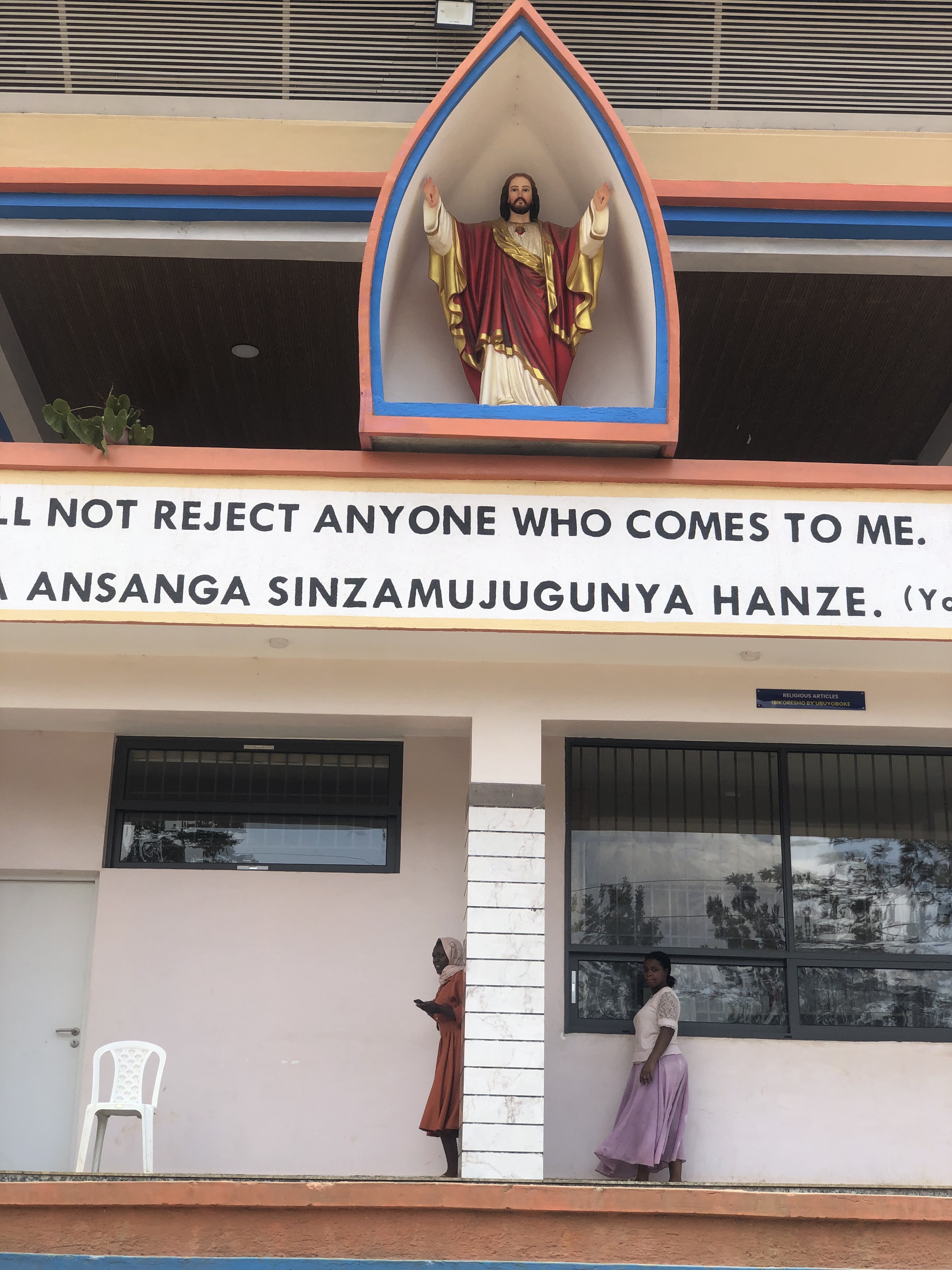
I try not to preach on the matter, for I am not a colonist. I’m here on the continent to learn. I’m here to soak up game. I only wish to be restored by the birthplace of the human race. I do not wish to change anything; I only pray for the humility to allow Africa to change me. But, when it comes to portraits of white Jesus, I’m not gonna lie, I just can’t seem to chill. 

 Woefully inaccurate blonde-haired blue-eyed Jesus is so ubiquitous in Africa that you would have thought the movie Malcolm X never came out. “A-hah. Ah-men.” From Elmina, Ghana to Johannesburg, South Africa to Kampala, Uganda this imposter is on local buses, in family homes, and on the walls of churches with the blackest of congregations. 
I had lunch one evening with a pretty little Buganda Queen. Well, she wasn’t literally a queen of course, but she was a proud member of the Buganda Tribe. She came from a well to do family. She had studied at a prestigious boarding school. She had been to the US on multiple occasions. Her brother is a doctor. And she owned the Airbnb that I was staying in, which is how we met. She took the time to actually greet me when I walked in the door of the apartment. It was almost like I came home to her for the first time. It was very endearing. So, a few days later, I asked her to er, erm…show me around town and she agreed.

The next day, we were sitting across from one another on the patio of this super swank jewel of a restaurant in the Kololo district when I found myself congratulating her on all of her success. She told me that she’s nowhere close to where she wants to be, but she is doing better than others because she refuses to be poor. 

I took a sip of my Sprite as she went on about how most Ugandans are perfectly fine with being poor. Then she told me about how she was ambitious enough to buy the Airbnb that I was living in from some Indian guy so she could have a steady stream of revenue coming in after she quit her job that she deemed to be too demanding. At this point, I realized in real time that if I could just keep my mouth shut and go along with what she is saying then there’s a good chance that later on we could have ummm, er, erm…gotten to know each other very well, but I just had to be me. Damn. 

“How is the person that you bought the apartment from an Indian?” I asked.

“Indians own the whole building. An Indian development firm financed it,” She shot back with eyes narrowed obviously trying to catch my meaning.

“Are there any wealthy Black Ugandans building high rises in New Delhi?”

 “No.”

“Exactly. I know a Rwandan lady who told me she lived in India for two years and they straight up told her that we don’t rent to niggers when she tried to get an apartment. All I’m saying is yes, you work extremely hard. At the same time though I think Western society is structured in a way that keeps the vast majority of Black people at the bottom.”

She did not disagree with me. She just felt the need to caution me not to blame white people or say that all white people are evil. I told her that I never said that, but I’ve been around the globe enough to know that white people share notes. The same oppression that Black folks are subjected to in East Detroit is the same form of bondage that Black people are privy to here in East Africa. And that we really need to start working on a solution.

“What is the solution?” She said with curiosity and a newly forming undercurrent of resentment. 

“Destroy all images of white Jesus. I mean like in the middle of every African city on some bonfire of the vanities type shit.”

She looked up at me with her chin down. She is a devout Christian, as am I. We listened to gospel music only in her car. She reminded me of my grandmother; it was so sweet. I asked her questions about every artist and every song that she played had a story attached to it about how she discovered it. I’m certain that she liked talking to me about this by the way that she smiled, but now I could see that I was falling out of favor. She didn’t know which category to place me in. She was bothered by the fact that she no longer controlled where we were going.

“No one knows what Jesus looks like,” she said.

 “Maybe, but we know he wasn’t a white dude with long flowing blonde hair and baby blue eyes.” 

 The certainty that left her body was born again as adrenaline in my veins. 

 “The bible doesn’t say anything about his physical appearance.” She was holding on tightly.

 I took out my phone to look up Revelations chapter 1 verses 13 and 14.

“Well, we know that historically the people of that region are not white and according to revelations his eyes were like a flame of fire, and his feet were like fine brass. The reason why white Jesus is so crucial to the imperialist’s operation,” I continued “Is because Europeans must be viewed as a savior in the mind of Africans both here and abroad, so we don’t hold him accountable for all of the ungodly acts that he’s coordinating on a daily basis. It makes us normalize his role as our natural leader while it simultaneously prevents us from seeing God in ourselves.” 

There was silence and not the comfortable kind as she blew me off. She believed that when you don’t know the race of a great person then the default should always be white. And perhaps most tragically, she believed that this is a harmless way of thinking. 

 In 2023 I took a group of Americans on a 10-day tour of Ghana. One afternoon we went to a Chinese owned store in Kumasi. One of the sisters on the tour walked down an aisle of dolls and was incredulous to see that they all were white. She was disheartened. She asked our guide, an Ashanti woman who grew up in the area, why there weren’t any Black dolls and the guide seemed to be slightly annoyed. As if she never noticed because it was such a petty thing to be concerned about.

“They just come that way,” was her response.

This Buganda woman was attractive, learned, and accomplished but after this discourse she dried up. She politely showed me the Kampala National Theater and a few other things before taking me home. A few days later I invited her to see The Odyssey on opening weekend with me. She told me that she was sick. A few days after that I checked out of her place. I was sure to give her a five-star review, but I never spoke to her or saw her again. 

I see race everywhere. America taught me to be this way. My idea of Blackness dictates the battles that I fight, the things that I see, the issues that I have, and the places that I travel. But alas, the concept of Blackness, not unlike white Jesus, is a western creation. Africans see the world differently. If African American trauma comes from being whipped on our naked backs until we dripped with blood, then African trauma comes from a complete reconfiguration of the psyche. The average African feels most abused by corrupt Black African politicians. They feel as though their respective countries are being left behind due to irresponsible Black leadership and the only answer is to flee to England, to France, to Germany, to America, to Whiteness. Whiteness being synonymous with all things good while Blackness is synonymous with incompetence.                    

This frame of mind leads to two young Black first time parents paying for their Black daughter to attend a school with paintings of children from every part of the world but Africa, because in order to make it she must leave. She gets good marks on her report card, so they buy her a pretty little white doll for her birthday. The child realizes that the baby doll is a different complexion from every single person that she sees in real life, but the doll is not unlike the children from her favorite kid shows on Netflix and YouTube. They all look so happy, so pretty, so smart, and so fair. This little girl is full of faith. Her parents taught her how to pray so every night she gets on her knees and prays to White Jesus to make her pretty like her doll, and like the children on Netflix, and like the painting of Jesus that she sees in church every Sunday. 

But alas, this can never be and the little girl comes to terms with this truth, however, she will not allow her dream to be totally deferred. As she grows into a woman she vows to get as close to White as possible. Close in looks, close in language, close in relationships, and close in proximity. For as far as her eyes and the eyes of her parents can see, this is what success looks like.  

-Roger Porter
A Conversation Between Two Grown Men

When I find out where to catch the local taxi in a country then it’s over with. That’s exactly what happened in Namibia. The audacity of the driver at the airport to charge me 350 rands for a ride to my Airbnb. It was downright disrespectful. Yes, I could afford it—I mean it’s about $20 USD—but that isn’t the point. Not only am I a traveler that likes to blend in with the people as opposed to staying in tourist traps but, more important than that, I’m just cheap. Not gonna lie, I do not like spending money. You can’t use the threat of a high crime rate to make me cough up a grip in order to stay in an all-inclusive resort. You can’t force me to commute around town in vehicles approved by the official board of tourism and charge me $20 a trip because the car has air conditioning and the seatbelts work. I’m not built that way. I do not scare easily. Blame it on my East Oakland California upbringing. 

So, I’m coming back from eating Kapana and fat cakes at a little hood spot called Wizy Man not far from The Dunes Mall in Walvis Bay.

I’m walking down the side of the main road trying to hail a taxi back to my place but for some reason they’re all passing me up which is quite weird because normally they would be honking in rhythm and screaming out of the window trying to get passengers into their van but now they’re acting all afraid. At this point a slender dark complexioned Namibian dude of about 35 years old says; 

“Eish! You can’t get a cab here. You’ll get a fine. This is a highway.” 

His warning forced me to actually talk in order to thank him, which may seem trivial but when I’m trying to blend in with a local community the last thing I want to do is speak because people instantly detect my American accent and from there it can get dicey. Maybe they ask me for money, maybe they try to scam me, maybe they ask me what the hell is wrong with Donald Trump, maybe they ask me if I know Meek Mill, either way my cover is totally blown. As was the case with this gentleman when I told him I’m from California. He was very chill about it though.             

He did ask me questions about the weather and what brought me to Namibia, however, he exuded a sense of calm in his curiosity. Then he offered to walk with me to the Taxi rank, and I obliged. As we walked through the weathered Namibian sand his line of questions got rather personal. He had already established that he worked for the gas company and he was still in his uniform. He didn’t strike me as someone that I should be afraid of. He had an upright gait and was reserved in his nature. He spoke to me about the history of Walvis Bay and how it was the one region of Namibia that the South African colonizers did not want to give up because it was so lucrative. 

We were chopping it up pretty tough which made my commitment to taking the local taxi more than worth it. He asked me if I found a woman back in Johannesburg and I opened up to him. I told him that I had. She was a pretty faced Tsonga girl from Limpopo, but I lost her and I was kind of heartbroken about it. He asked me what happened, to which I replied that we had gotten into an argument and the situation never got back to where it needed to be. He asked me whose fault it was and I stumbled with my words. I finally managed to say that it was debatable. I told him that I apologized to her twice, however, it didn’t have the desired effect. 

“She took my apology as a sign of weakness. And after that she kept doing more and more. Like, she started talking super reckless and getting bold with me.”

I struggled to confide in him. This was actually the first time I had ever spoken about it, and I wasn’t sure that I was even making sense, but he got it. 

“Yeah. Women can get that way.” He said somberly.

He slowed down half a beat as we were nearing the taxi rank. I could have hailed one on my own. We were close enough for the drivers to cruise by beeping their horns in quick succession while looking at us to see if we needed a lift. He did not need one because he lived nearby and suddenly, I had the patience to wait. I knew that whatever this man was about to say, he needed me there to listen. And that’s exactly what I did.

He and his wife were business owners but, in the beginning, their venture wasn’t doing well. They couldn’t get clients in their home turf of Walvis Bay which, by American standards, would be a rather slow, medium sized coastal town not unlike Monterrey, California. Somehow a decision was made to expand the brand to Johannesburg which, by American standards, is New York City. They decided—or she decided—that she should go to the city alone. He spoke to me with great clarity and with a bright veneer of confidence, while somehow simultaneously exuding the quiet vulnerability of a schoolboy telling his best friend about the problems that he was having at home.

“When you get married too young there’s always drama,” he said.

His face was stoic like a war veteran emotionally preparing himself to tell a combat story to civilians. It took all the power in his soul to keep him from falling apart as he spoke to me. His wife’s trips to Johannesburg grew longer and longer and to exacerbate the situation, she left him with their two small children every time she went to the city. At some point during the scaling of their business, she reasoned that it would be cheaper for her to get an apartment and live in Johannesburg part time. This is what sparked his investigation. He began checking her emails, her text messages, and eavesdropping on phone conversations. It didn’t take long for him to confirm that she was indeed having an affair. When he confronted her about it, she dug her heels into the ground. Not only did she admit to it, but she demanded a divorce.

I went mute. I did not say, Woooow. Nor did I say, Damn that’s hella crazy, under my breath. I only looked at him as he told a story that men typically never share with other men. And he did this while maintaining the utmost dignity. I just couldn’t imagine a young stranger back in the states recounting this to me while being completely sober. By now we had stopped moving. Our feet firmly planted in the sandy Walvis Bay Road. Our physical destination no longer mattered. We stood apart from all the Namibians who walked by us on either side with I just got off from work energy. His home no longer mattered and neither did my Airbnb. I listened to him as if it would save his life. And he spoke to me as though each syllable that he uttered was poison, and if he did not get it out of his system then he would surely die. 

In his tribe, divorce is not handled by the courts. It is handled by the elders. The first step in the process, he told me, was both parties agreeing that they wanted to separate. He refused. He told them flat out that he did not want to divorce his wife. There was a pause at this point of his testimony. Then he cleared his throat. I nodded to let him know that I was still with him, but I still rendered myself inaudible. They received village counseling on their marriage for weeks. In the process her lover in Johannesburg backed out of the situationship due to the steady stream of anguish that she was bringing to him now that their affair was out in the open. His only intentions were to have fun. After all, he was there for the sex and not to be her therapist. Finally, after dozens of hours of mediated conversations, they were instructed to go back home and work on their relationship in earnest.

 As soon as they settled back in together, his wife was as pleased with the marriage as she was when they were newlyweds. Her vibe was much lighter. She spoke to him with a sweetness that sounded foreign to his ears. And the more she cuddled up beside him in bed the more he realized that he was still extremely pissed with her. He told me that he had only stayed with her for the children. He also felt like she was mocking him with her joy. While she played, he tended to the children, and he worked every day at the gas company. Now that she was back it was his turn to go outside and play.

My mouth opened slightly while I moved my head closer to him in disbelief as if I was having a hard time hearing him from a mere two feet away. He had an affair; he told me with a sense of deep conviction. He is having an affair with a younger woman. His wife knows about it and does not like it, but he feels like he deserves it, for it brings him genuine joy every time he’s with this woman. He looked me directly in my eyes and with a levelheaded intensity asked me;

“Should I stop seeing my side chick because my wife doesn’t like it? Considering the fact that she has no moral ground to stand on?”

“Breh!…I mean damn. Ok. I feel like. Well first off…”

I was caught so far off guard. When I listen to someone, I listen aggressively. It requires all my strength, therefore the transition from being a listener to being a talker is always a difficult one for me to make.  

 â€œShout out to you for fighting for your marriage. I think most men, including myself…Especially myself, would have let their ego take over when she asked for a divorce and just went along with it whether we wanted to or not. You deserve all the adulation in the world for that. And then you know what? Shout out to you for even getting married at such a young age. When my daughter was on the way the adults felt like I should have married her mom, but I explicitly said I wasn’t ready and though I meant it, sometimes I wish that I would have done it just so my daughter could know that she comes from a solid union. But you stepped into your faith and that’s very commendable.”

He nodded and said thank you as he looked off somewhere over my head and into the distance. I rambled a little longer before asking him what the agreed upon terms of their healing process were. I asked him if there was a grace period where the both of you could see other people or was the expectation to be 100% committed. He said it was the latter. Then I reminded him that he gave his word as a man. 

“Once you give your word,” I went on. “Then you are beholden to it. You gotta look at it like this. You’re not giving your wife a second chance so much as God is giving your union a second chance. If you want your marriage to work, then you’re going to have to be 100% committed. You gotta let the side chick go. She’ll be alright.” 

I try really hard not to give relationship advice because I am so bad at them but there, I was at a taxi rank in Walvis Bay, Namibia trying to fill up a depleted man with words of love. He received it. He did not say as much, however, I could see it in the relaxation of his shoulders and how deeply he began to breathe. He turned to the road and hailed a taxi for me which in this case was a white Nissan that already had four people in it. He asked for the price in Oshiwambo. It was 20 Namibian dollars straight to Langstrand which is about $1.25 USD. Hell yeah! 

I gave him a quick fist bump before climbing into the backseat of the taxi. We did not share any more words with one another. The conversation was over though its qualities still resonate in my head as I’m sure it still resonates in his. We didn’t make things fake by exchanging social media or promising to hit one another up on WhatsApp. We just went our separate ways knowing that we had both made the other a better man. 

We never needed them

We knew about Freddie Jackson. We knew about Luther Vandross. We knew about Jermaine Stewart. We knew about Frank Ocean too. But we still nodded our heads to the beat and did the snake when they sang the chorus. We still walked across the gymnasium floor and asked the girl to dance when we heard the first note of that ballad. We still let the bass bang hard in the trunk once we downloaded the album. Despite the fact that they maybe, probably, more than likely were singing to another man, we dedicated the record to the girl who we were with in the back seat of our mom’s Honda. We didn’t need a rainbow flag to force us to accept them. We didn’t need those five letters to make us respect the choir director and our Uncle Peaches. They were a part of our community before the colonizers made it weird. We were more progressive than history will ever remember.

Summer Rain

I am not Carl Thomas and San Francisco is not Jamaica, or Houston, or Savannah Georgia—that is to say, we are not prepared for Summer Rain. The fog rolls in when it wants to. The cold may surprise you when the sun goes down, but actual precipitation is damn near non-existent. The tourists don’t know any better. They go the beach anyway because it’s on their schedule. They have to take pictures at the Santa Cruz, Beach Boardwalk or else they’ll be judged harshly by their social media followers. The drab sky brings a heavy depressive energy to the natives. We feel stifled. If we could protest God over this debacle then many of us would. We demand our mediocre 75-degree summers back now! We don’t want any weather patterns that would cause us to engage in introspection or even worse, one that may facilitate a process by which we would arrive at individual accountability. We don’t want to have anything to do with it. We were created to look down and not inward. This simply will not suffice.    

The Likoni Ferry

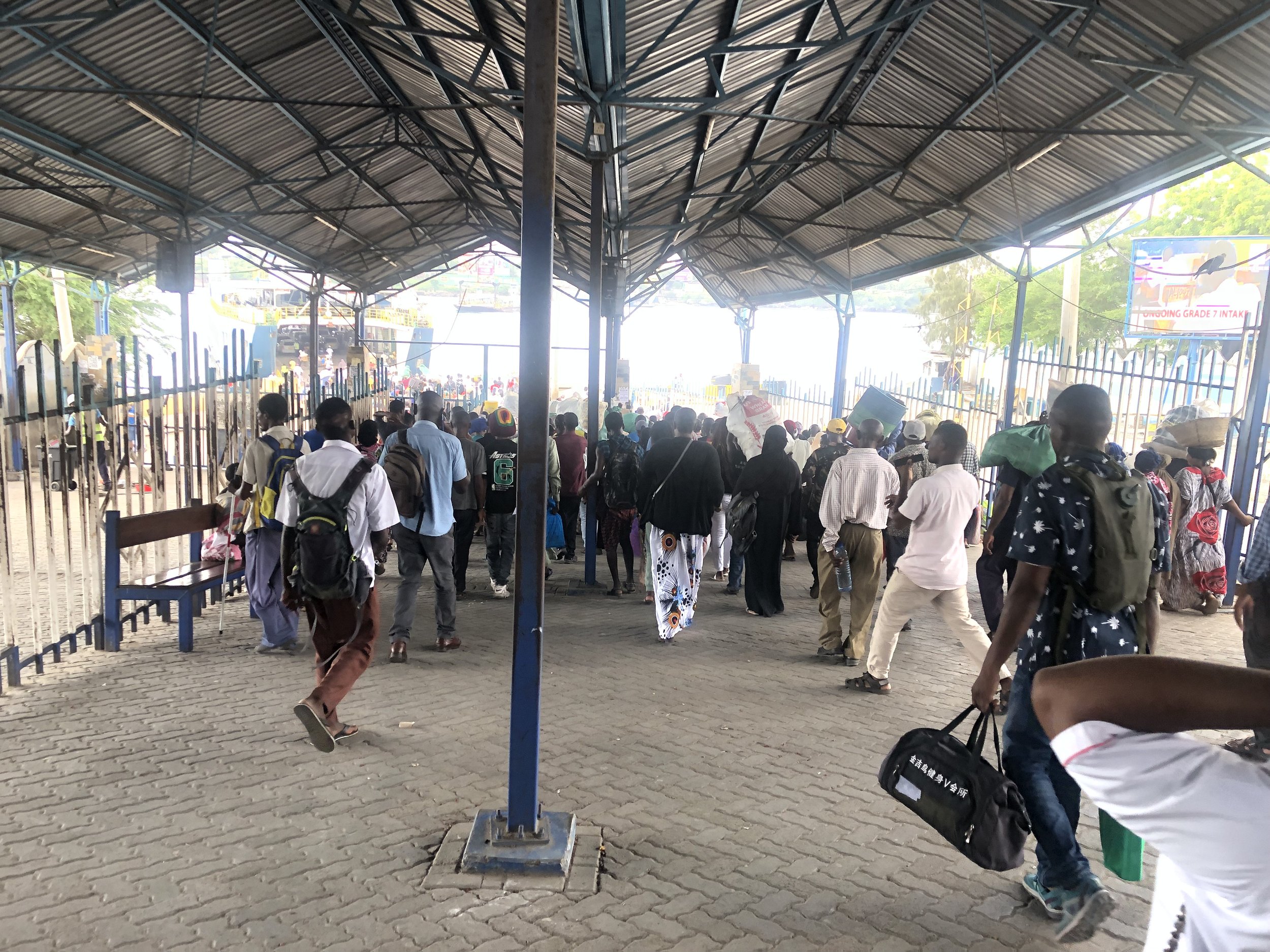
I was somewhat lost, extremely confused, and kind of frustrated. I was 10,000 miles from California in a city called Mombasa on the South Coast of Kenya. I thought that I had proper instructions from my host to get to my Airbnb, but she posted directions from the train station (Mombasa Terminus), however, I was at MOI international airport. So, I had to figure out how to get to my apartment rental near Diani Beach and I didn’t like the $4,000 Kenyan Schillings price that Bolt (an international ride sharing app which is cheaper than Uber) was charging to get there. So, I decided to take a taxi about halfway there instead. This would put me back on track with the route that my host had given me. It would also require that I take the Likoni Ferry. This ferry ride would be an unexpectedly healing experience for me. It was profoundly spiritual and deeply fulfilling.

I’m aware that this must sound absurd to the average Kenyan. It must be the equivalent of someone saying they were moved to tears by the beauty of the people on the BART Train, or they had a cultural awakening on the back of an AC Transit Bus. We tend to not recognize the potency of what we see every day. Sometimes it takes looking at the world through the eyes of the tourist to see what we take for granted. My ride on the Likoni Ferry represented one of those super rare occasions when you recognize that you’re in a moment within the actual moment. I walked onto a boat with no less than 1,000 other Black people who brought bikes, had babies on their backs, and carried bags. I was no doubt the only “American” and probably the only tourist on the entire ferry. My Bolt driver advised me not to get on. I’m glad that I’m hardheaded and refused to take his advice.

I had an enormous suitcase that was 2 kilograms overweight at the airport, but the nice lady at Kenyan Airlines allowed me to slide without a penalty. I also had a huge burgundy backpack that I once used to go camping in Yosemite National Park for three days. It has several compartments, zippers, and hidden storage space. It’s great for backpacking, but it’s extremely conspicuous when it comes to city walking.  

“It’s not safe for you to take the ferry with those bags,” he said.

“Really?” I replied somewhat sarcastically.

My driver was a very long limbed but somehow average sized man named Peter. It took a few phone calls and me having chase him down in the Airport parking lot for him to see me when he arrived. This turned out to be a bonding experience for us. By the time I sat down in the backseat of his Hyundai I felt like we were homies. 

“Yeah.” He said sharply. “Anybody can go through your bag on the ferry. Be careful.”


Every African that I have ever met in Africa thinks Africa is the most dangerous place in the world. When I tell them that major American cities are way worse in terms of theft and violence they refuse to believe me. I once tried to explain this to a Liberian woman in Accra, Ghana. She shook her head then told me with a strong conviction; “No, America is heaven.” Of course I didn’t tell Peter any of this. I just said:

“Ok, I’ll be careful.” 

I actually appreciated his advice. It was just that my lack of speaking Swahili—the official language of Kenya— prevented me from explaining my perspective. I live my life knowing that I can be robbed, maimed, or killed any second. I’m always vigilant when I’m in public spaces and there was nothing that he could say to make me any more or any less aware of my surroundings. There was also nothing he could tell me to keep me from getting on that ferry. In fact, the more he spoke the more excited I got about boarding.


I was sick of being separated from normal Kenyan experiences because I was a visitor from a foreign country. The tourism industry is structured like a traveler’s ghetto in that the local government keeps you boxed in so they can control the outcome of your experience. The roads that you can walk down, the restaurants where you can eat, the people you encounter, and the way you commute is all predetermined. In the ghetto the ultimate objective is to keep you trapped at the bottom of society. In tourism the sole purpose is to manipulate your mind by giving you a watered-down version of culture while encouraging you to spend way more money than you should on items that you do not need. This stimulates the local economy and makes the billionaire hotel owners even more wealthy.


Think all-inclusive resorts. They keep you fenced in for most of the day. They give you a swimming pool, beach access, or both. They give you a menu with a few native foods and local juices alongside hamburgers, chicken strips, French fries and Coca Cola. They employ locals to serve you and perform for you. And they only allow you to move about the city in chartered vehicles that the hotels own. All of this while people live in squalor right outside the gates of your paid fantasy. Nah, I ain’t with it. I have never been with it. I was going to hop on that ferry with the people of Mombasa and I was ready to deal with whatever consequences came with it.

We had to get out of the car about 200 meters from the ferry station. Cars and tuk tuks are allowed on the ferry but the passengers must pay. Pedestrians and cyclists are free which was another major incentive for me to take the ride. Peter insisted on walking me to the security check-in. After I paid Peter, I was heading to the embarking point when three Kenyan security guards stopped me.

“Jambo! Jambo! You come here.”

I walked over to the men pulling my oversized suitcase behind me.

“What is in the bag?”

“My clothes. Most of them are dirty.”

“Open the bag.”

I opened my suitcase, and the main guard who was asking all the questions sifted through my belongings while noticeably avoiding touching my dirty drawers.

“Where are you from?”

“I’m from California.”

“Oh, USA. Do you bring a gun?”

“No, I left all my guns at home.”

We both laughed, then he zipped up my suitcase and let me go. I walked into a large rectangular area with benches that were being quickly filled up. People had bags full of fish, beans, and clothes to sale on the other side of Kilindini Harbor. A woman walked by while gracefully balancing a large green sack on her head. A teenaged boy pulled up on his bike. A mother and father sat down with their two boys. The males in that family had clearly come straight from the barbershop because their lineups were immaculate. The people kept arriving. Each and every one of them had business to attend to on the other side. All of them moved with the familiar mundanity of a morning commute as it was about 9:30am.


I’m certain that they saw diversity in one another. I’m sure they could determine tribal affiliations by body type, gait, or skin tone. They could probably tell who was from the countryside and who was from the city based on accent and attire. Perhaps they could decipher who was formerly educated versus who had been working on a family farm their entire lives. I could not figure out any of these things, nor did I try to. All I saw was Black people and all I heard was the intermittent sounds of a soothing African tongue that I did not know how to speak. I was calmed by not being able to understand sentiments that might ruin my day. I was unaware of who was gossiping, who was cursing, who was being offensive, or who had a different political ideology than I do. I was blanketed by my obliviousness. I was comforted by what I did not know.  Then we began our descent.


It was time to be loaded onto the ship which was at the bottom of a cement hill. I walked in synchronicity with the people of Mombasa. I was in the middle of the crowd, in a country in Africa, headed into the bottom of a boat. I thought about the middle passage—the indescribably brutal tragedy that ripped my ancestors from the continent and forced them into chattel slavery for centuries—but this was not a kidnapping. This was a reconnection. This was an initiation ritual. This was a baptism into a culture that had the power to redirect my spirit. I was being reunited with everything that had been lost. I pulled my luggage behind me onto the vessel, and I carried my backpack like a thousand burdens on my back. I did not stop walking. I did not speak at all. Even when asked a question in Swahili I just shook my head, no. I did not want to speak English. I did not want to be an American. I did not want to be an individual. I wanted to be at peace. I wanted to be whole and move within a body of people striving toward a singular destination. As I found my position on the ship, I looked up to my left and saw black people going up the stairs to the next level. I was surrounded by the Kenyan people—my people, whether they knew it or not. And as the powerful motor of that ferry propelled the entire lot of us across the water, I knew that I belonged. And I knew that I was safe because everyone was far too preoccupied with their own bags to be concerned about taking mine

Uncle Red

Here is my piece from the recent published anthology by Ajuan Mance entitled “1001 Black Men: Portraits of Masculinity at the Intersection.”

https://stackeddeckpress.com/product/1001-black-men-portraits-of-masculinity-at-the-intersections/

Joe Camel was everywhere when I was a child. He was on television, he was on bus stop benches, and he was selling cigarettes on billboards in the same manner that Billy Dee Williams was hawking Colt 45. This was the late 1980s which represented the last days that such blatant targeted advertisements would be allowed in the African-American community. My childhood was impacted by Joe Camel in the same way that kids of today are being impacted by Blueberry vape pens. The drawing of Joe Camel smoking a cigarette as he played a game of pool was hella fly to me. In my young preadolescent opinion, even though he didn’t speak, he was the dopest cartoon image ever. He had more charisma than Bugs Bunny and was a bigger boss than Leonardo from the Ninja turtles. Even more significant than that was the fact that he was the mascot for my Uncle Red’s preferred brand of smokes. Which meant that he was present at my grandmother’s house, family get togethers, or where ever my uncle happened to be.

When I was little I thought my Uncle Red was the coolest man in the world. Partly because he had been to prison and partly because he used to be a pimp, but really because he smoked Camel cigarettes. He would blow smoke rings in the backroom of my grandmother’s house and let the kids break them up with our fingers. He had a thousand stories and never told the same one twice. In retrospect all of them were wildly inappropriate for a boy in elementary school to hear, but I still soaked up all of his game like a sponge. Anytime I was able to walk with him down 3rd Street in the Bayview section of San Francisco or down E14th in East Oakland it was like basking in the light of a celebrity.

 Uncle Red is sure to walk on the outside of me and my cousins so that he is the one closest to the traffic. He lets us run to the corner while he stays behind with a Camel cigarette pursed in between his lips. We make it to the corner and stop to wait for him before we cross the street. I turn around totally out of breath and look back at my uncle who is taking out his lighter to light up another cigarette. He is wearing white leather platform shoes, white bell bottoms, a white button up shirt, a white blazer, and a nappy chest. His hair is combed back. His hairline is barely receding. The sun catches his bronze complected face in a way that makes him look like a mixture of Goldy from The Mack and Joe Camel himself. By the time he catches up with us we have caught our breath. We walk together across the street and into the liquor store where I get animal crackers and a soda. My cousins get Lemonheads, Jolly Ranchers, and Funyuns. My uncle asks for Camel Menthols which are behind the counter. Uncle Red pays for everything. While he steps out of the door he flicks his cigarette butt onto the concrete and I run to step on it first. He opens up the new box of Camel Menthols and shakes another cigarette into his palm, then he places it into his mouth. My cousins and I run ahead to the next corner and I am in the lead.  

My uncle went to prison fairly often for drug related offenses. When he was granted parole he went straight from San Quentin to my grandmother’s house where his shoe collection was there waiting for his release. He had snake skin boots, gator skin shoes, suede platforms,  and loafers of every imaginable color. Most of them were still in their boxes in my grandmother’s backroom. The backroom at my grandmother’s house was central to family life because that was where the television was located. There was another television in the living room, but we couldn’t watch that one. The living room was just for show. It had plastic seat covers on all of the furniture and if it wasn’t a very special occasion my grandmother would slap you for setting your foot in there. So we would watch tv with my Uncle Red in “his room.” 

On this particular day he is fidgety and slightly annoyed. He taps his box of Camels but it is empty. He then takes a deep breath, curses, and asks my sister to go to the corner store and buy him some smokes. My sister is 12-years-old. I am 8. He gives us enough money to buy some candy with the change and we’re off. We walk down Shafter Avenue to get to 3rd Street where the Arab store is. We bring our candy to the register. My sister asks for a pack of Camel menthols. The Arab man behind the counter tells her that she is too young. She replies that they’re not for her. They’re for her uncle. The Arab man says that she needs a note. We go back to my grandmother’s house and tell Uncle Red. He says to my sister “Well write a note.” My sister writes a note in her very best cursive handwriting and signs my uncle’s name on the bottom of it. We go back to the corner store and purchase the cigarettes without a problem.

Over the next few decades there would be a justifiable war on cigarettes and the harm that they had done to generations of people. They would be exposed for lying about all of the health risks that their products cause and for specifically marketing menthols—which is the most addictive form of cigarette—to the African-American community. Billboards and commercials promoting tobacco products would be strictly prohibited. Joe Camel became a relic and places of business that sold cigarettes to minors would face serious sanctions. My grandmother passed away in 2016 and the family lost her home in the Bayview. My uncle, however, is still going.

About a year ago I saw him on Macarthur Boulevard in Oakland. He had checked himself into a program for drug addiction. The program was run through a church. I passed the church and saw him standing out front. He had finally given up the bell bottoms and the platforms for blue jeans and sneakers. Yet he still was wearing a button up shirt and had a nappy chest. I pulled over and called him to my car. I got out and hugged him in the street. He said he was proud of me and he meant it. I told him that I was proud of him too and I thanked him for always making me feel safe as a child. We reminisced for a minute and laughed, but he looked incomplete. When I was about to get in my car to leave he stopped me. 

“Say nephew. Do you have some change? I need some smokes.”

“For sure,” I said with no hesitation.

I gave him a bill and then gave him another hug. As I drove off I saw him walking toward the corner store in my rearview mirror. I sped through the green light at the corner.  

-Roger Porter

College Bound Brotherhood Recognizes Its Latest Graduates At Oakland Event

Roger Porter

June 10, 2011

Note: Here is a piece that I wrote for www.oaklandlocal.com that was published today. Just to let you all know I do write about positive things from time to time, though I try not to. LOL.


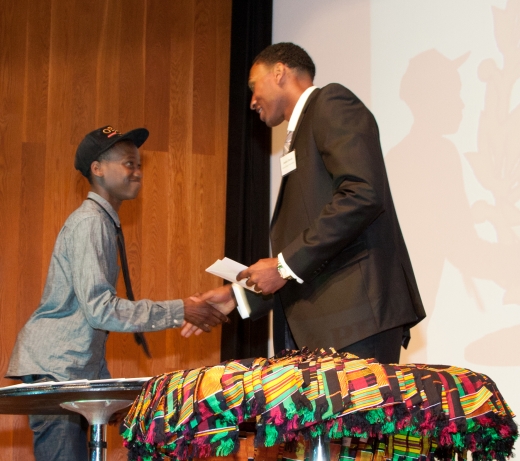
As I walked down Oak Street on my way to attend the College Bound Brotherhood Graduation Celebration earlier this week, I met a young man named Charles Breed who was heading to the same destination.

He wore his hat to the back and walked in the slow, cool, strut that seems to be unique to African-American males. Charles, along with 65 graduating seniors from Bay Area high schools, was being honored at the annual event held at the Oakland Museum. When I asked him what the evening meant to him, however, he was at a loss for words.

That’s when his aunt who accompanied him could not help but to jump in:

“I registered him for this event because it’s a milestone. He is the first,” she slowed her speech down for emphasis “man in the entire family to graduate from high school.”

Now Charles who 30 seconds ago was the epitome of cool could scarcely conceal his grin as he blushed and looked away.

The Wednesday evening graduation, which was hosted by the Mitchell Kapor Foundation, was created to celebrate the young black men in the Bay Area who graduated from high school and plan on attending college in the fall despite the abysmal statistics. Statistics such as only 11 percent of the black males who graduate from high school in the San Francisco Bay Area have the courses and grades required to attend a California university.

The young men who participated in the ceremony were given a $100 stipend along with a first class celebration. Karen Bevels catered the banquet portion of the event and soul food was definitely on the menu. There were chicken strips, greens and macaroni and cheese. The vibe was extremely positive as predominately young black people milled around the room in business attire and dress clothes. The scene stood in stark contrast to the murderous war torn Oakland, which is consistently depicted in the media.

Akili Terry, a sophomore at Marin Catholic High School who helped out at the event, captured this misrepresentation perfectly when he said, “Everybody in the hood don’t smoke, drink or get hyphy but we do have that spirit.”

That spirit was on full display while an African drum procession led the large gathering of graduates, friends and family into the auditorium for the ceremony. It was there that Jahsiri Asabi-Shakir a graduating senior from Bentley High School gave a riveting performance of a poem that he penned himself called “Skin tone.” It’s no wonder that Jahsiri will be attending the prestigious Morehouse College in the fall.

The keynote speaker was Lloyd Pierce, an assistant coach for the Golden State Warriors. And he was on point with his address: He simply challenged all of the graduates to look toward the future and told them “to be better than you are right now.”

His brief, yet powerful, speech seemed to resonate with the students as they took the stage and announced where they planned on attending college and their intended major. Each of them strolled across the stage exuding the confidence of a man who made it even though all the odds were against him. They all possessed an undeniable swagger – a swagger that seems to be unique to African-American males.

The Primal Scene

Roger Porter

April 30, 2011

Me and my cousin are 11-years-old. We are lying down in his room, he is on his bed and I am on the floor. We are both recuperating from our first full week of football practice.

“You think we gone make the team?” My voice seems to carry quicker through the darkness. “Yeah we both gone make the team.” He responds confidently as if he has inside information from the coaches. Right then my uncle bursts into the room wearing Gazelle sunglasses, a white tank top, boxers, and green Pumas with fat laces (even though it’s the mid 1990’s not the 80’s).

“Hey,” he says in his deepest voice. His speech slightly slurred and a camel cigarette behind his right ear. “If ya’ll hear something going on in the living room don’t worry about it just go on back to sleep. And uh, if ya’ll got to go to the bathroom then go right now cause me and Precious gone need some privacy.”

We each pull our blankets over our heads and giggle. Precious is his longtime girlfriend—his main chick. Together they made my little cousin so we know they had sex, but to see my Uncle’s compact muscular frame in his underwear announcing to us that he is about to get some was ridiculously funny. “Alright, man down,” are his final words to us before he closes the door.

I couldn’t imagine him making that announcement before we started playing football. His son signing up for youth football seemed to be the best thing that had happened to him since he had children. Five total but only one boy. He was once a star running back at Southern University and he always wanted his son to follow in his footsteps. So he videotaped our first day of practice and bought us catfish and French fries afterwards. He told us some of his old football stories and for the first time in our lives he treated us like men and not children.

We stayed awake listening to Precious’s high pitched half screams and my Uncle’s loud panting that followed. Our white teeth glowed in the darkness of that small room as we tried to feel vicariously what they felt.

The Death of a Father

Roger Porter

It’s early November 2010 and finally after months of me complaining about seeing her ride through my hood with her new boyfriend, but never coming by to say hello, my cousin pulls into my driveway with her two young daughters in the backseat and her boyfriend in the front. She gets out of the car and we begin to catch up.

She asks me whether or not my daughter is in the house and I tell her no. Her daughters, ages 3 and 5, say they want to go see the pit bull behind my neighbor’s gate down the street, but every time we make it halfway they both scream “Noooo!” and scramble back to the car.

My cousin asks me about amateur boxing; how can she sign up, when my next fight is and why she wasn’t invited to any of my other ones. Her boyfriend asks me if I mind him smoking in front of my house and I tell him yes. He’s slightly irritated, but he understands. So my cousin and I continue to converse until we notice a car creeping up the block.

The driver is a light-skinned man with a slight build and small afro who sticks his head out of the window to survey the scene. My cousin stops talking and halfway rolls her eyes;

“That’s Sa’rye’s daddy.”

The man gets out of the car and as he approaches I think about the drama that may unfold. I mean here was his ex-girlfriend talking to two guys who he doesn’t know while his 3-year-old daughter is playing in front of some house in East Oakland that he’s never been to. I notice my cousin’s new boyfriend tense up a bit as he sits in the passenger seat with the door open and his right leg hanging out of the car. He watches the scene from the rearview mirror. The man crosses the curb and steps onto my lawn and I can’t help but to wonder how I would handle the situation if I were him.

He picks up his daughter without even acknowledging anything else.

“Hey Daddy!” Sa’rye screams in excitement.

I introduce myself to him and he tells me his name is Darryl and shakes my hand. He then tells his daughter that he is on his way to work, but will see her later before kissing her on the cheek. He says peace to us, heads back to his car and drives off. While he’s leaving I say to myself, “Wow, that’s exactly how I would have handled that situation.” Meanwhile the girls keep playing, my cousin and I resume our conversation and her new boyfriend relaxes once again in the passenger seat of her car.

A few months later my cousin called me to see how I was doing. I told her our grandmother was in the hospital and then she told me about drama at her job. We talked about our daughters and how they need to grow up around one another like we did.

Then she paused and said, almost as an afterthought: “You know Sa’rye daddy got killed right?”

“Naw, I didn’t,” I replied. “That was the one I met right?”

“Yeah, he got killed at the liquor store right down the street from your house.”

And then she spoke to me of no arrests being made in the murder, that it happened on Dec. 18 and that she suspects it was probably some youngsters trying to earn stripes, all in an extremely detached tone. A tone that conveyed 30 years of ghetto conditioning.

I listened to her as she told me that he had been robbed in the month leading up to his murder and that some men who stood on a local corner resented the fact that he had 20-inch rims on his black Infinity and that he was relatively new to the neighborhood. It didn’t matter to them that he earned the money by working at a hotel or that he wasn’t involved in the street life at all. They looked at Darryl as being an easy mark so they went after him. In the final weeks of his life he began to develop very real premonitions of his murder. So much so, my cousin went on, that on at least one occasion he asked to spend the night at her house just so he could be under the same roof as his daughter.

My cousin thought this was a bizarre request considering they were no longer in a relationship and that she was now heavily involved in a new one. I could tell that of all the things that occurred in the time leading up to Darryl’s death this puzzled her more than anything else. For myself, on the other hand, I couldn’t have related to him more.

My two-year relationship with my girlfriend was already rocky by the time my daughter was born during my senior year in college. But when my little girl entered the world, I became determined to make things work so I asked my girlfriend to move in with me. And even if the relationship was clearly failing I was still determined to put up the best front for my child so that she could enjoy the luxury of growing up in a two-parent household – something that I never experienced.

On the contrary, my girlfriend wasn’t nearly as delusional. After about five months of extreme tension, very little conversation and no affection – except for the shared but ultimately separate love that we had for our daughter – she came to me suggesting that we break up. I didn’t disagree. As a matter of fact, I felt really relieved until she told me that she would be moving out, which, of course, meant that she would be taking our daughter with her.

I tried to talk her out of leaving to no avail. Next, I tried to get her father to talk her into staying, but not staying in the relationship, just staying in the house so I could come home to my daughter every day. He thought the idea was ridiculous.

“What if one of ya’ll wanna bring somebody else home?” he asked.

I thought about it for a minute, but couldn’t come up with a response.

So no more than 48 hours after we broke up all of my daughter’s and ex-girlfriends things were being loaded into a truck. I made sure that I wasn’t home when she moved out. I didn’t want to deal with it so I stayed at the campus library and studied all day and deep into the night. By the time I got home and stepped in the door, I immediately felt the emptiness and was almost sickened by the silence. I made my way to the room where my baby used to sleep and was incredulous to see the crib still there, fully intact.

As it turned out they didn’t bring the tools to dismantle it so they had to leave it there for a few more days. As I approached it I could still hear my daughter cooing while slapping the thin mattress. I could see her as she pushed up on her stomach like a baby seal at the Pier. But when I looked over the upraised sides and into the crib the only thing I saw was a Winnie the Pooh bedspread and a set of multicolored toy keys. I then remember leaning into the crib and crying uncontrollably. I realized then that I hadn’t merely lost a girlfriend, but I had lost my family. Things would never be the same.

After I got off the phone with my cousin, I couldn’t stop thinking about Darryl’s murder. It was just another reminder that fatherhood, like all other things in the hood, is extremely uncertain.

This weekend, I pick up my daughter who is now 6 years old. I have been fortunate enough to have consistent visitation as a noncustodial parent since her mother and I split. We have dinner together, go to the movies and play basketball. I always look forward to picking her up, however, for the past few months often times when I hold her in my arms I think about my cousin’s daughter.

Sa’rye is an assertive, young 3 year old with an ebullient personality. She has her whole life ahead of her, but it disturbs me to know that she will have to navigate through this often times shady world without knowing her biological father.

There is no doubt that when Sa’rye gets older she will learn the footnotes of her father’s life. She will know things like his name was Darryl Starks, he attended Castlemont High School and he died Dec. 18, 2010, at the age of 26.

But will she ever know how much he loved her? Will she ever be able to feel that love? Will she remember the day when her father stopped his car in the middle of the street just to steal a hug and kiss from her before he went to work? Will she ever be told that one of the last things her father wanted to do before he left this Earth was to sleep under the same roof as her? Or will she grow only to be obsessed with his absence, fueling an unconscious resentment toward every man she encounters? I don’t know.

I do know Sa’rye comes from a resilient culture and a strong family. I also know that she can grow up and accomplish whatever she wants to achieve. On the other hand, I will never understand why her father was taken from her and I’m sure she won’t either. So now when I kiss my daughter on the cheek or help her with her jump shot I know that I’m not just doing it for me. I do it for all those men who wanted to be fathers, but couldn’t. I do it for Darryl Starks and countless other men who are just as righteous as me.

Shasee’s Dad

by Roger Porter

I had to leave work early that day in order to pick up my two year old daughter Shasee from daycare. At the time I was teaching at a non profit organization in Richmond, CA. I started working there as a part time tutor my junior year in college, and once I finished I was promoted to a full time position. I was young, committed to the kids, and had earned a fair amount of respect at the job, therefore it was OK for me to leave early every now and then.

“Alright then Mr. Porter,” a 10th grade student I worked with told me as I opened the door to leave.

“Peace,” I replied as I walked slowly to the parking lot while checking my cell phone to see who called me.

I thought about my daughter while stuck in traffic on highway 80. She hated her daycare. On the mornings when I would have to take her she would cry from the time I strapped her in her car seat to the time I rang Mrs. Carrie’s doorbell. Luckily for me the daycare was only two blocks away from our house.

I kind of felt her though. I mean it was unfortunate that I had to put her in childcare at such a young age, especially when I only saw her every other week, but I had to work every weekday. I couldn’t quit and I couldn’t rearrange my schedule so that was that.

As I pulled into my driveway and stepped out of my car I saw one of my friends from Junior High School driving in an old Buick with his stereo up full blast.

“Rog,” he yelled as he smashed by!

“Ayyyy,” I replied rather delayed and not sure that he heard me!

As I stepped into the living room of my house I saw a puzzle with big colorful letters that read KINSHASA. It was something my mother bought so that my daughter could learn how to spell her full name, since she had already learned how to spell Shasee, the nickname that everyone called her.
I changed clothes quickly, wrote a check for thirty dollars to pay Mrs. Carrie, sent approximately two text messages and began walking around the corner to pick up my daughter. As I approached the block that her daycare was on I received a text. I read it as I walked briskly down the Avenue. It was sent by a young lady I was dating and it made me smile.

When I looked up I could see about ten little toddler to preschool age children playing in front of Mrs. Carries daycare but I couldn’t see my daughter. They were pushing each other in toy cars and playing with a bright red bouncing ball. There was one kid in particular whose eyes were transfixed on me as I walked toward him.

This kid had to be about four years old with a honey colored complexion. He wore his hair in long cornrows that I’m sure his mother had allowed to grow since birth. He whispered to the other children and then he began to slowly walk toward me.

I looked down at him and he looked up to me with very large light brown eyes.

“Are you Shasee’s dad,” he asked me in a wondrously curious tone?

Shasee’s dad? Did this kid really just refer to me as Shasee’s dad? My name is Rog I wanted to tell him and I grew up in this neighborhood. As a matter of fact I probably went to school with your mother. I am Roger Porter I played football for the Oakland Dynamites and the Skyline Titans. I ran track for the West Side Kickers and got into college. I even graduated from college with a degree in English and still work and live in the hood. I am Mr. Porter. I teach kids how to appreciate books and use writing as form of therapeutic release. Shasee’s dad; was this little bastard serious? I looked around at all the little children at play and realized that none of my accomplishments would ever matter to them. To them I was only Shasee’s dad.

I was twenty four years old man stopped dead in my tracks by a little boy twenty years my junior. To make matters worse he maintained eye contact with me so I felt that I couldn’t simply walk away without answering him. Not that I was ashamed of the title I just wasn’t really aware of it so it kind of startled me. The term Shasee’s dad meant that my little two year old had developed her own identity and had made friends to compliment her little smart mouthed personality—which I was oh so aware of. My daughter was now her own little person and I was merely her dad. I was simply the old guy that dropped her off, picked her up, and bought all of her clothes.

It was shocking to me that after all of my success in beating the odds I was being identified through a two year old. It was all happening too fast, I wasn’t sure that I was ready. But then I had to be because the time had come. I no longer had a baby who had to be around her family all the time and cried in the middle of the night if she felt around the bed and no one was there, but rather I had a big girl who had just taken her first steps toward independence.

“Yeah I’m Shasee’s dad,’ I told him ‘could you go get her for me please?”

That little bastard.