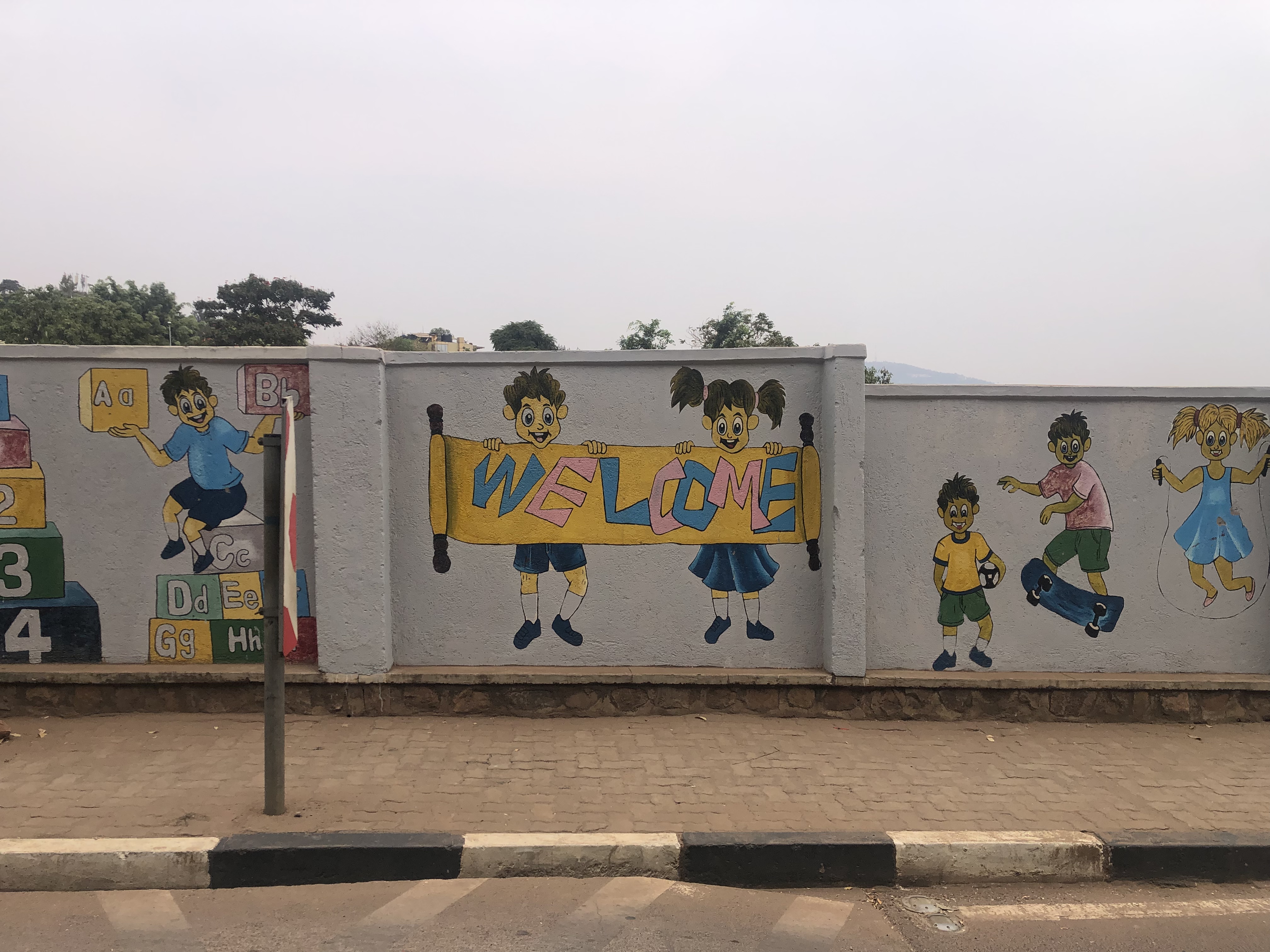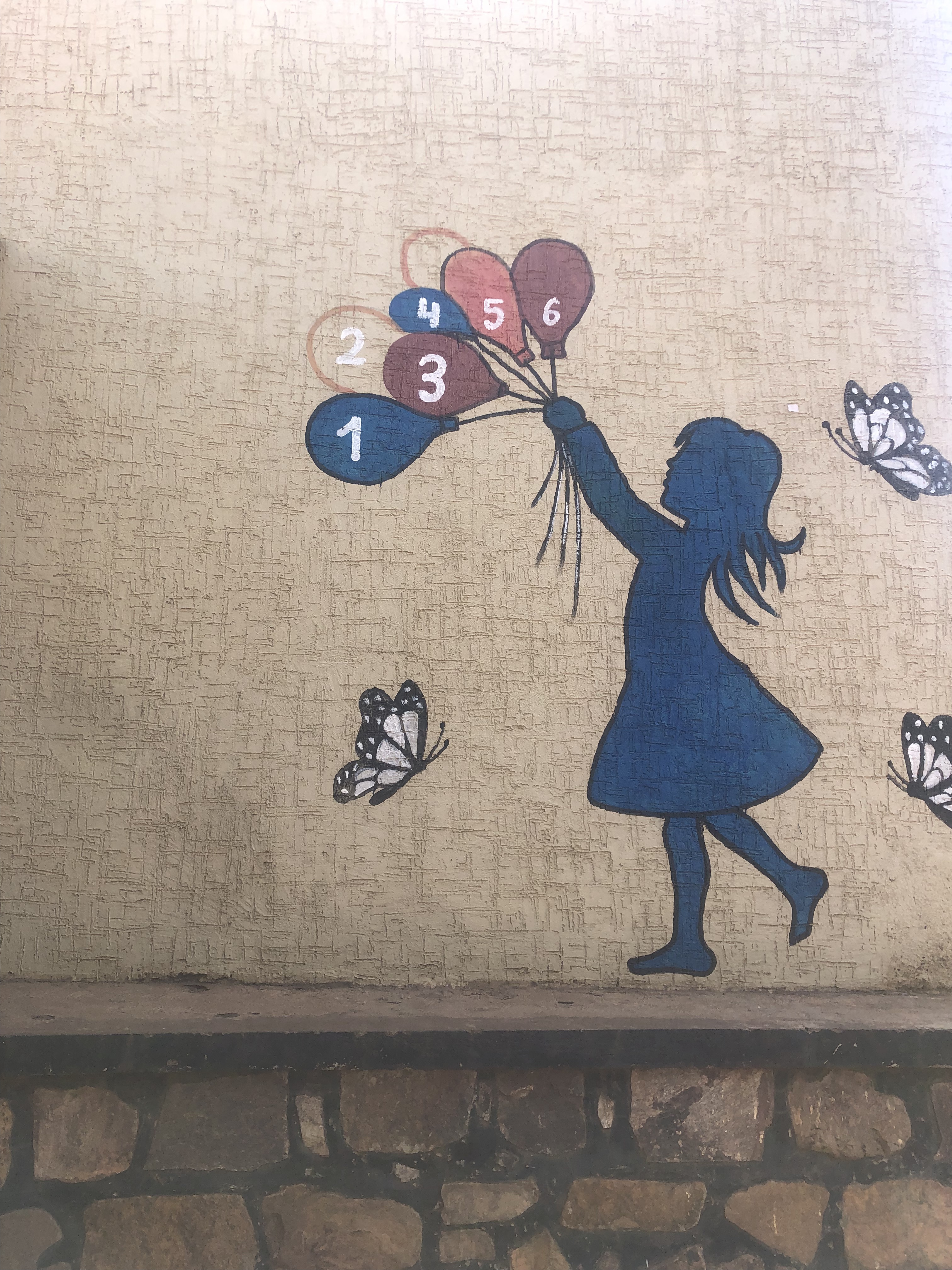
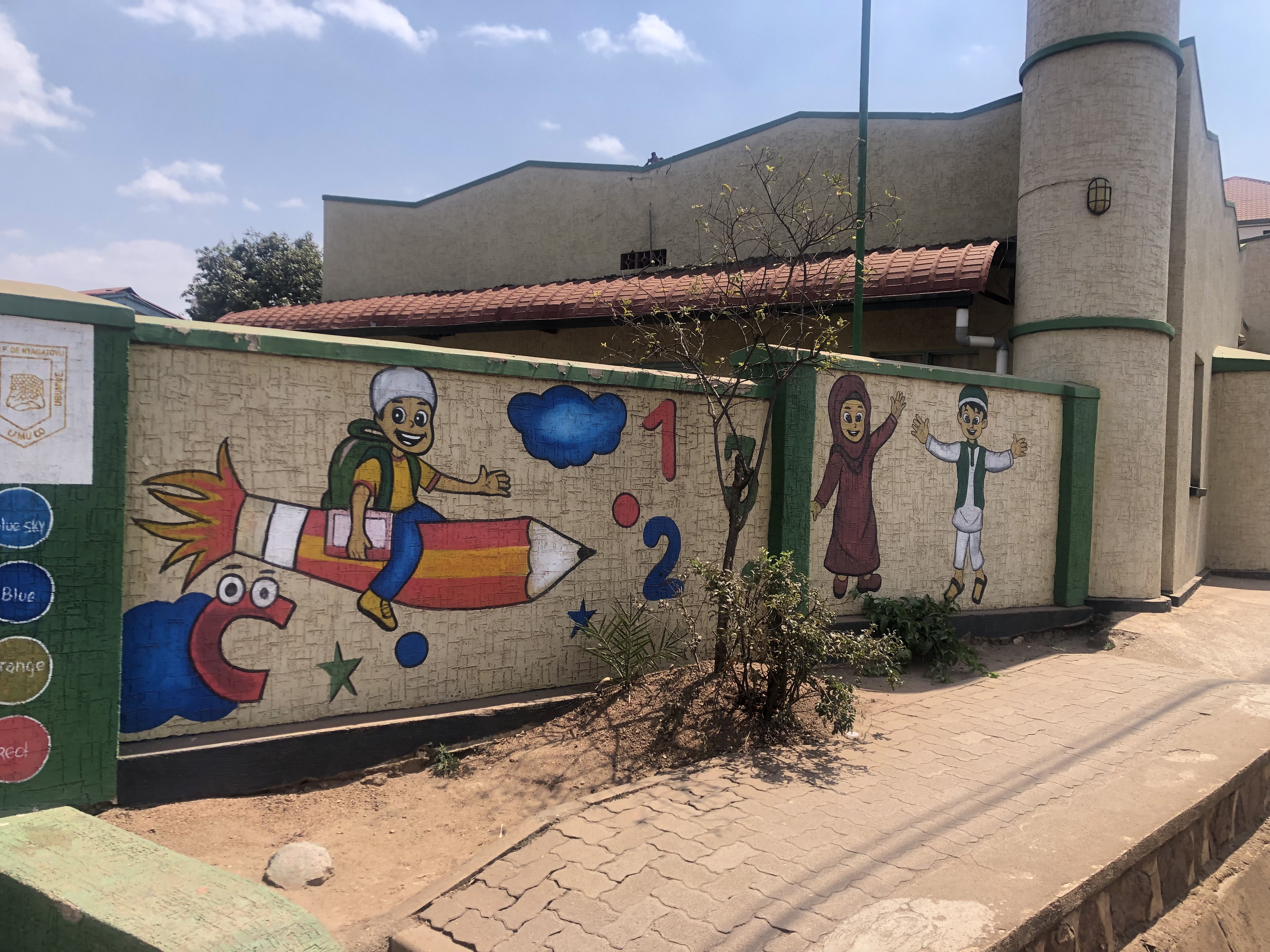
There’s something about the American phrase Representation Matters that doesn’t really resonate in Africa. In Kigali, Rwanda for example, there is a surprising lack of Black children on the murals of the nursery and primary schools. The depictions are of smiling Chinese kids, White kids in front of a welcome sign, Middle Eastern children with turbans on their heads, Indian kids too, but no Black children (Ok maybe there will be one token Black child on a mural with 10-15 kids). Inside the actual institutions, however, there are nothing but little Black learners. It baffles the hell out of me, but the Africans that I have spoken to about this do not take notice and generally don’t care.
About a month ago as I was coming back to Kampala from The Source of the Nile Tour in Entebbe, Uganda I decided to ask my driver about this erasure of blackness. He could barely conceal his irritation. To him I may as well have been a child asking, why is the sky blue?
“It’s just a painting,” he said.
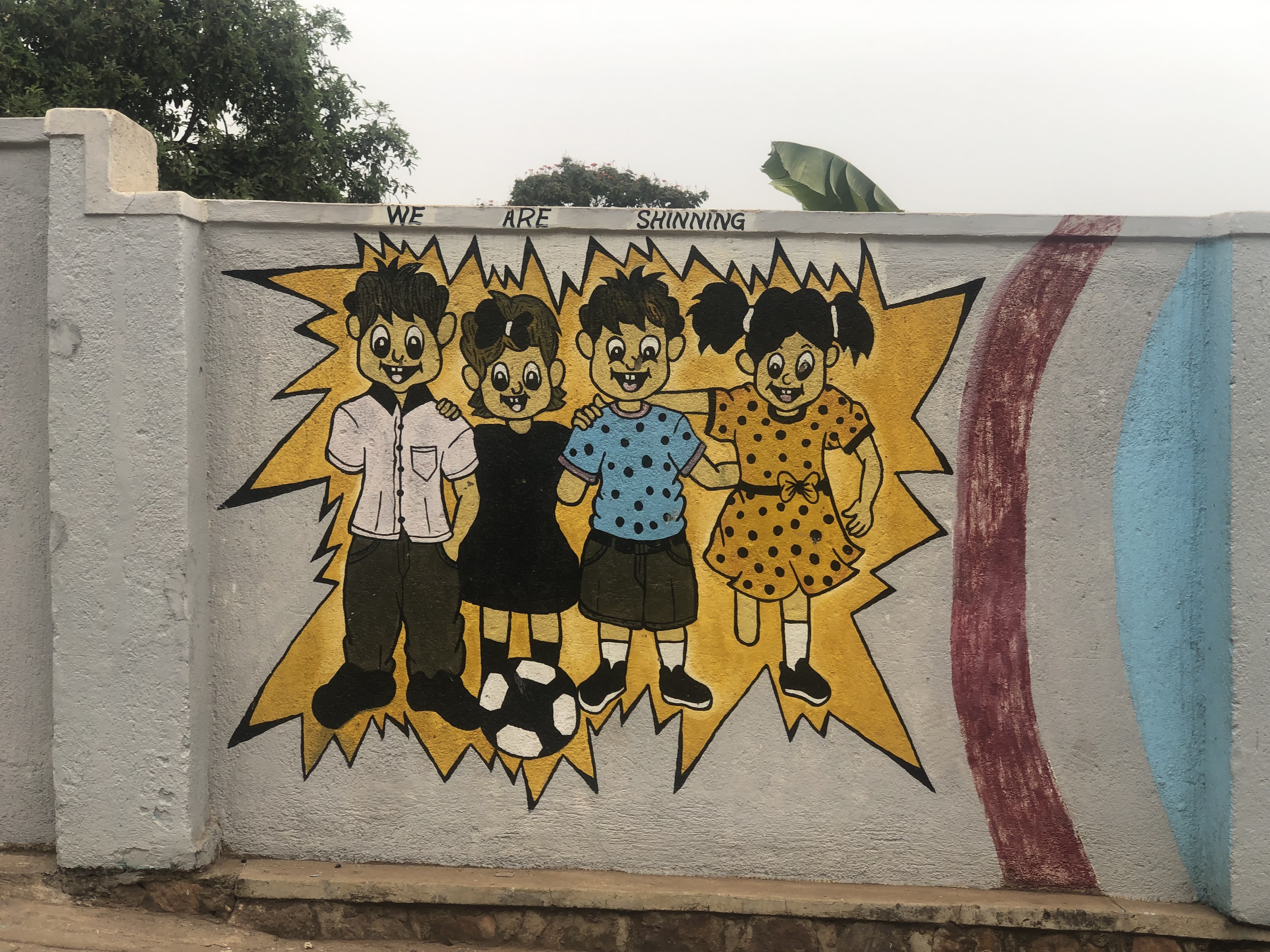
“Yes, I know, but the kids see it every day on the way to school. I’m sure that it makes them feel unworthy to not see anyone that looks like them on the school that they go to.”
He looked around outside as he searched his brain for an answer that would best explain the Ugandan position on such matters.
“It’s like that,” he said as he pointed inside of a clothing boutique store.
“All the mannequins in there are white. The people who shop there are black, but the mannequins are white. It’s just how it is.”
The exasperated tone with which he spoke was supposed to convey to me that it was a trivial matter that didn’t deserve any further discussion, but I wasn’t going for it.
“The situation with the mannequins is slightly different because they are more than likely imported from white countries,” I told him. “With these paintings, an exclusively Black school paid a Black artist to paint nonblack children on a wall in an effort to enroll more Black children from a 100% Black African neighborhood. Why can’t they have images of the different tribal affiliations and ethnic groups that are present here, so the kids feel more welcome? Something feels wrong about having murals on the preschools that don’t have Black children. Then I left it. I allowed the conversation to shift as we got slammed by rush hour traffic. After all, this man was not a political theorist. He was merely trying to earn a tip in the midst of an Ebola crisis that pretty much stopped all tourism to Uganda. He did not want to be pulled into an argument, so I stopped pushing.
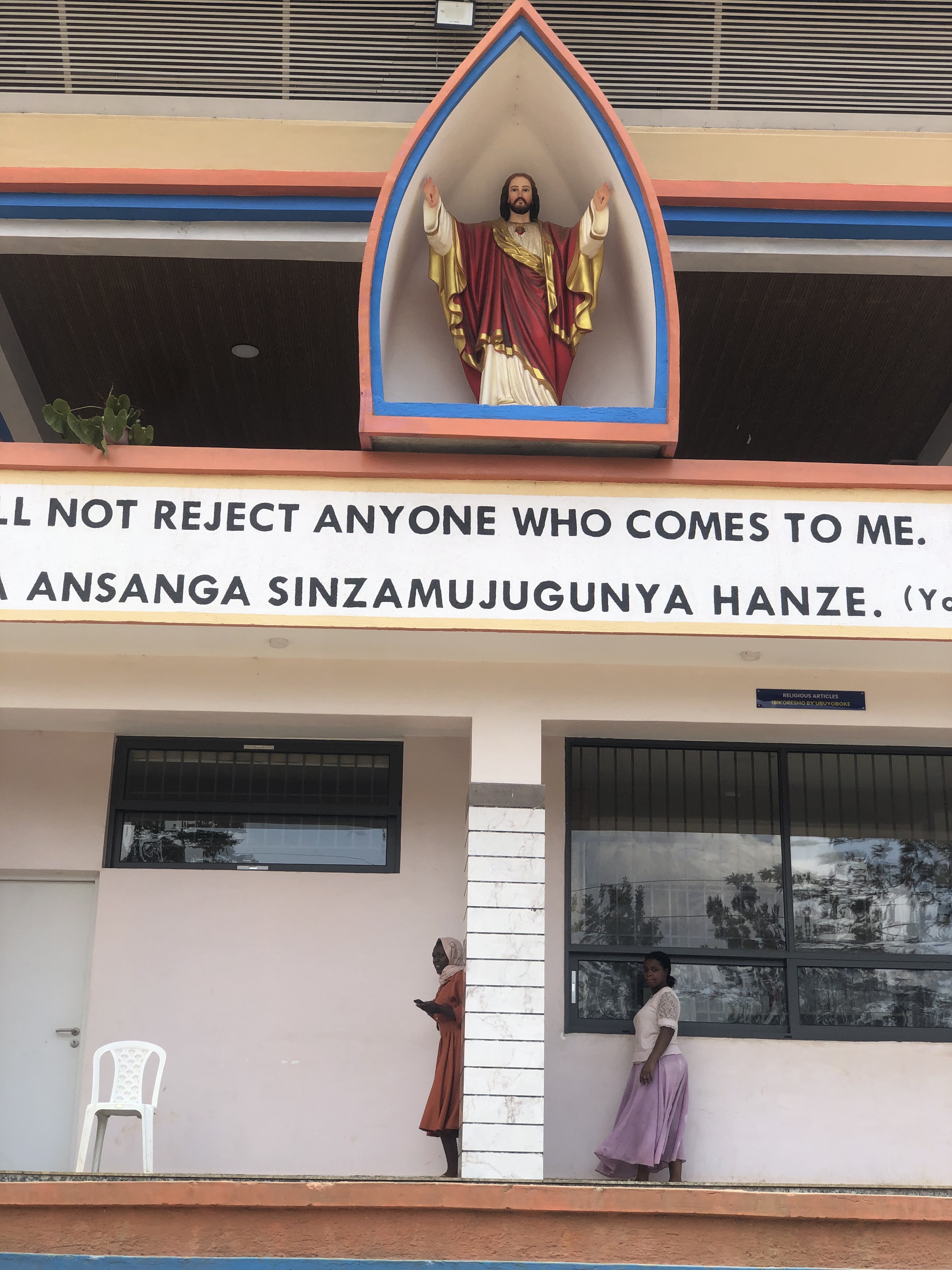
I try not to preach on the matter, for I am not a colonist. I’m here on the continent to learn. I’m here to soak up game. I only wish to be restored by the birthplace of the human race. I do not wish to change anything; I only pray for the humility to allow Africa to change me. But, when it comes to portraits of white Jesus, I’m not gonna lie, I just can’t seem to chill.
Woefully inaccurate blonde-haired blue-eyed Jesus is so ubiquitous in Africa that you would have thought the movie Malcolm X never came out. “A-hah. Ah-men.” From Elmina, Ghana to Johannesburg, South Africa to Kampala, Uganda this imposter is on local buses, in family homes, and on the walls of churches with the blackest of congregations.
I had lunch one evening with a pretty little Buganda Queen. Well, she wasn’t literally a queen of course, but she was a proud member of the Buganda Tribe. She came from a well to do family. She had studied at a prestigious boarding school. She had been to the US on multiple occasions. Her brother is a doctor. And she owned the Airbnb that I was staying in, which is how we met. She took the time to actually greet me when I walked in the door of the apartment. It was almost like I came home to her for the first time. It was very endearing. So, a few days later, I asked her to er, erm…show me around town and she agreed.
The next day, we were sitting across from one another on the patio of this super swank jewel of a restaurant in the Kololo district when I found myself congratulating her on all of her success. She told me that she’s nowhere close to where she wants to be, but she is doing better than others because she refuses to be poor.
I took a sip of my Sprite as she went on about how most Ugandans are perfectly fine with being poor. Then she told me about how she was ambitious enough to buy the Airbnb that I was living in from some Indian guy so she could have a steady stream of revenue coming in after she quit her job that she deemed to be too demanding. At this point, I realized in real time that if I could just keep my mouth shut and go along with what she is saying then there’s a good chance that later on we could have ummm, er, erm…gotten to know each other very well, but I just had to be me. Damn.
“How is the person that you bought the apartment from an Indian?” I asked.
“Indians own the whole building. An Indian development firm financed it,” She shot back with eyes narrowed obviously trying to catch my meaning.
“Are there any wealthy Black Ugandans building high rises in New Delhi?”
“No.”
“Exactly. I know a Rwandan lady who told me she lived in India for two years and they straight up told her that we don’t rent to niggers when she tried to get an apartment. All I’m saying is yes, you work extremely hard. At the same time though I think Western society is structured in a way that keeps the vast majority of Black people at the bottom.”
She did not disagree with me. She just felt the need to caution me not to blame white people or say that all white people are evil. I told her that I never said that, but I’ve been around the globe enough to know that white people share notes. The same oppression that Black folks are subjected to in East Detroit is the same form of bondage that Black people are privy to here in East Africa. And that we really need to start working on a solution.
“What is the solution?” She said with curiosity and a newly forming undercurrent of resentment.
“Destroy all images of white Jesus. I mean like in the middle of every African city on some bonfire of the vanities type shit.”
She looked up at me with her chin down. She is a devout Christian, as am I. We listened to gospel music only in her car. She reminded me of my grandmother; it was so sweet. I asked her questions about every artist and every song that she played had a story attached to it about how she discovered it. I’m certain that she liked talking to me about this by the way that she smiled, but now I could see that I was falling out of favor. She didn’t know which category to place me in. She was bothered by the fact that she no longer controlled where we were going.
“No one knows what Jesus looks like,” she said.
“Maybe, but we know he wasn’t a white dude with long flowing blonde hair and baby blue eyes.”
The certainty that left her body was born again as adrenaline in my veins.
“The bible doesn’t say anything about his physical appearance.” She was holding on tightly.
I took out my phone to look up Revelations chapter 1 verses 13 and 14.
“Well, we know that historically the people of that region are not white and according to revelations his eyes were like a flame of fire, and his feet were like fine brass. The reason why white Jesus is so crucial to the imperialist’s operation,” I continued “Is because Europeans must be viewed as a savior in the mind of Africans both here and abroad, so we don’t hold him accountable for all of the ungodly acts that he’s coordinating on a daily basis. It makes us normalize his role as our natural leader while it simultaneously prevents us from seeing God in ourselves.”
There was silence and not the comfortable kind as she blew me off. She believed that when you don’t know the race of a great person then the default should always be white. And perhaps most tragically, she believed that this is a harmless way of thinking.
In 2023 I took a group of Americans on a 10-day tour of Ghana. One afternoon we went to a Chinese owned store in Kumasi. One of the sisters on the tour walked down an aisle of dolls and was incredulous to see that they all were white. She was disheartened. She asked our guide, an Ashanti woman who grew up in the area, why there weren’t any Black dolls and the guide seemed to be slightly annoyed. As if she never noticed because it was such a petty thing to be concerned about.
“They just come that way,” was her response.
This Buganda woman was attractive, learned, and accomplished but after this discourse she dried up. She politely showed me the Kampala National Theater and a few other things before taking me home. A few days later I invited her to see The Odyssey on opening weekend with me. She told me that she was sick. A few days after that I checked out of her place. I was sure to give her a five-star review, but I never spoke to her or saw her again.
I see race everywhere. America taught me to be this way. My idea of Blackness dictates the battles that I fight, the things that I see, the issues that I have, and the places that I travel. But alas, the concept of Blackness, not unlike white Jesus, is a western creation. Africans see the world differently. If African American trauma comes from being whipped on our naked backs until we dripped with blood, then African trauma comes from a complete reconfiguration of the psyche. The average African feels most abused by corrupt Black African politicians. They feel as though their respective countries are being left behind due to irresponsible Black leadership and the only answer is to flee to England, to France, to Germany, to America, to Whiteness. Whiteness being synonymous with all things good while Blackness is synonymous with incompetence.
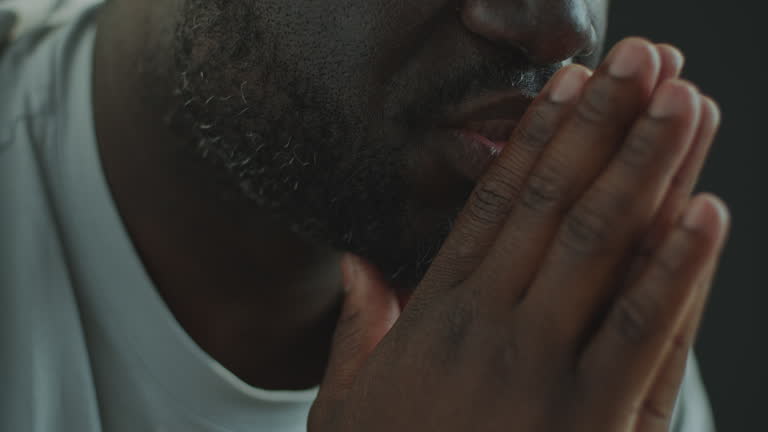
This frame of mind leads to two young Black first time parents paying for their Black daughter to attend a school with paintings of children from every part of the world but Africa, because in order to make it she must leave. She gets good marks on her report card, so they buy her a pretty little white doll for her birthday. The child realizes that the baby doll is a different complexion from every single person that she sees in real life, but the doll is not unlike the children from her favorite kid shows on Netflix and YouTube. They all look so happy, so pretty, so smart, and so fair. This little girl is full of faith. Her parents taught her how to pray so every night she gets on her knees and prays to White Jesus to make her pretty like her doll, and like the children on Netflix, and like the painting of Jesus that she sees in church every Sunday.
But alas, this can never be and the little girl comes to terms with this truth, however, she will not allow her dream to be totally deferred. As she grows into a woman she vows to get as close to White as possible. Close in looks, close in language, close in relationships, and close in proximity. For as far as her eyes and the eyes of her parents can see, this is what success looks like.
-Roger Porter