On Thanksgiving, my uncle would say grace with such religious fervor, honesty, and poetic sensibility that we would forget that we were hungry. We would forget about all of his demons, and he would forget about them as well. He would wipe his glistening forehead with a handkerchief as he spoke to our heavenly father for us. And we would stand around a table full of the most flavorful dishes. Full of food that we had been smelling all day. Food that the women of the family had put all the love in their hearts into. We stood there in reverence not only to God, but to the man that expressed our collective gratitude so handsomely. We knew that every alley that he had been in, every prison cell, every crack house, every dimension of hell on Earth that he lived in made his prayer the most worthy of rejoice. For we were the 99 and he was the 1.
We knew about Freddie Jackson. We knew about Luther Vandross. We knew about Jermaine Stewart. We knew about Frank Ocean too. But we still nodded our heads to the beat and did the snake when they sang the chorus. We still walked across the gymnasium floor and asked the girl to dance when we heard the first note of that ballad. We still let the bass bang hard in the trunk once we downloaded the album. Despite the fact that they maybe, probably, more than likely were singing to another man, we dedicated the record to the girl who we were with in the back seat of our mom’s Honda. We didn’t need a rainbow flag to force us to accept them. We didn’t need those five letters to make us respect the choir director and our Uncle Peaches. They were a part of our community before the colonizers made it weird. We were more progressive than history will ever remember.
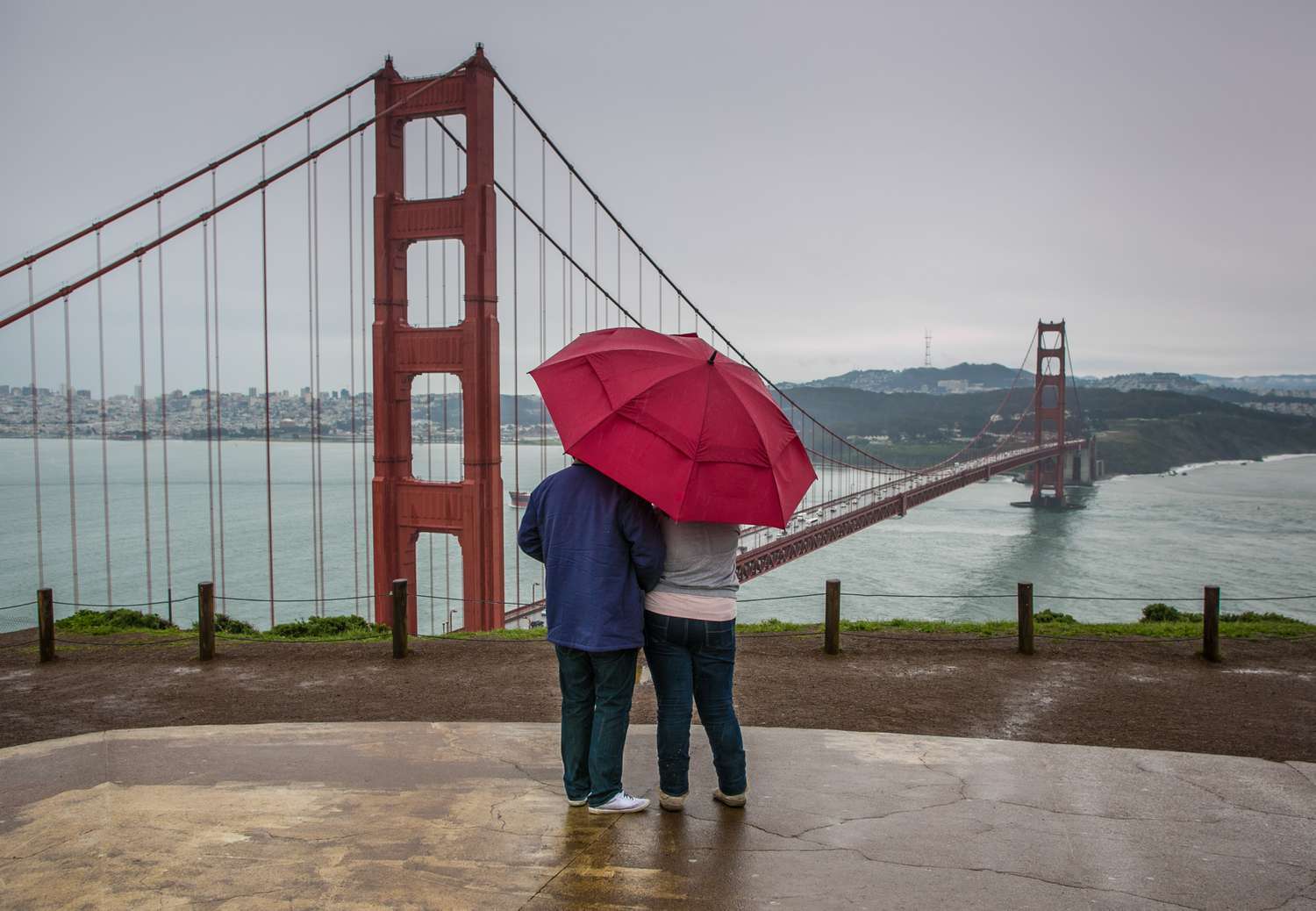
I am not Carl Thomas and San Francisco is not Jamaica, or Houston, or Savannah Georgia—that is to say, we are not prepared for Summer Rain. The fog rolls in when it wants to. The cold may surprise you when the sun goes down, but actual precipitation is damn near non-existent. The tourists don’t know any better. They go the beach anyway because it’s on their schedule. They have to take pictures at the Santa Cruz, Beach Boardwalk or else they’ll be judged harshly by their social media followers. The drab sky brings a heavy depressive energy to the natives. We feel stifled. If we could protest God over this debacle then many of us would. We demand our mediocre 75-degree summers back now! We don’t want any weather patterns that would cause us to engage in introspection or even worse, one that may facilitate a process by which we would arrive at individual accountability. We don’t want to have anything to do with it. We were created to look down and not inward. This simply will not suffice.
I was somewhat lost, extremely confused, and kind of frustrated. I was 10,000 miles from California in a city called Mombasa on the South Coast of Kenya. I thought that I had proper instructions from my host to get to my Airbnb, but she posted directions from the train station (Mombasa Terminus), however, I was at MOI international airport. So, I had to figure out how to get to my apartment rental near Diani Beach and I didn’t like the $4,000 Kenyan Schillings price that Bolt (an international ride sharing app which is cheaper than Uber) was charging to get there. So, I decided to take a taxi about halfway there instead. This would put me back on track with the route that my host had given me. It would also require that I take the Likoni Ferry. This ferry ride would be an unexpectedly healing experience for me. It was profoundly spiritual and deeply fulfilling.
I’m aware that this must sound absurd to the average Kenyan. It must be the equivalent of someone saying they were moved to tears by the beauty of the people on the BART Train, or they had a cultural awakening on the back of an AC Transit Bus. We tend to not recognize the potency of what we see every day. Sometimes it takes looking at the world through the eyes of the tourist to see what we take for granted. My ride on the Likoni Ferry represented one of those super rare occasions when you recognize that you’re in a moment within the actual moment. I walked onto a boat with no less than 1,000 other Black people who brought bikes, had babies on their backs, and carried bags. I was no doubt the only “American” and probably the only tourist on the entire ferry. My Bolt driver advised me not to get on. I’m glad that I’m hardheaded and refused to take his advice.
I had an enormous suitcase that was 2 kilograms overweight at the airport, but the nice lady at Kenyan Airlines allowed me to slide without a penalty. I also had a huge burgundy backpack that I once used to go camping in Yosemite National Park for three days. It has several compartments, zippers, and hidden storage space. It’s great for backpacking, but it’s extremely conspicuous when it comes to city walking.
“It’s not safe for you to take the ferry with those bags,” he said.
“Really?” I replied somewhat sarcastically.
My driver was a very long limbed but somehow average sized man named Peter. It took a few phone calls and me having chase him down in the Airport parking lot for him to see me when he arrived. This turned out to be a bonding experience for us. By the time I sat down in the backseat of his Hyundai I felt like we were homies.
“Yeah.” He said sharply. “Anybody can go through your bag on the ferry. Be careful.”
Every African that I have ever met in Africa thinks Africa is the most dangerous place in the world. When I tell them that major American cities are way worse in terms of theft and violence they refuse to believe me. I once tried to explain this to a Liberian woman in Accra, Ghana. She shook her head then told me with a strong conviction; “No, America is heaven.” Of course I didn’t tell Peter any of this. I just said:
“Ok, I’ll be careful.”
I actually appreciated his advice. It was just that my lack of speaking Swahili—the official language of Kenya— prevented me from explaining my perspective. I live my life knowing that I can be robbed, maimed, or killed any second. I’m always vigilant when I’m in public spaces and there was nothing that he could say to make me any more or any less aware of my surroundings. There was also nothing he could tell me to keep me from getting on that ferry. In fact, the more he spoke the more excited I got about boarding.
I was sick of being separated from normal Kenyan experiences because I was a visitor from a foreign country. The tourism industry is structured like a traveler’s ghetto in that the local government keeps you boxed in so they can control the outcome of your experience. The roads that you can walk down, the restaurants where you can eat, the people you encounter, and the way you commute is all predetermined. In the ghetto the ultimate objective is to keep you trapped at the bottom of society. In tourism the sole purpose is to manipulate your mind by giving you a watered-down version of culture while encouraging you to spend way more money than you should on items that you do not need. This stimulates the local economy and makes the billionaire hotel owners even more wealthy.
Think all-inclusive resorts. They keep you fenced in for most of the day. They give you a swimming pool, beach access, or both. They give you a menu with a few native foods and local juices alongside hamburgers, chicken strips, French fries and Coca Cola. They employ locals to serve you and perform for you. And they only allow you to move about the city in chartered vehicles that the hotels own. All of this while people live in squalor right outside the gates of your paid fantasy. Nah, I ain’t with it. I have never been with it. I was going to hop on that ferry with the people of Mombasa and I was ready to deal with whatever consequences came with it.
We had to get out of the car about 200 meters from the ferry station. Cars and tuk tuks are allowed on the ferry but the passengers must pay. Pedestrians and cyclists are free which was another major incentive for me to take the ride. Peter insisted on walking me to the security check-in. After I paid Peter, I was heading to the embarking point when three Kenyan security guards stopped me.
“Jambo! Jambo! You come here.”
I walked over to the men pulling my oversized suitcase behind me.
“What is in the bag?”
“My clothes. Most of them are dirty.”
“Open the bag.”
I opened my suitcase, and the main guard who was asking all the questions sifted through my belongings while noticeably avoiding touching my dirty drawers.
“Where are you from?”
“I’m from California.”
“Oh, USA. Do you bring a gun?”
“No, I left all my guns at home.”
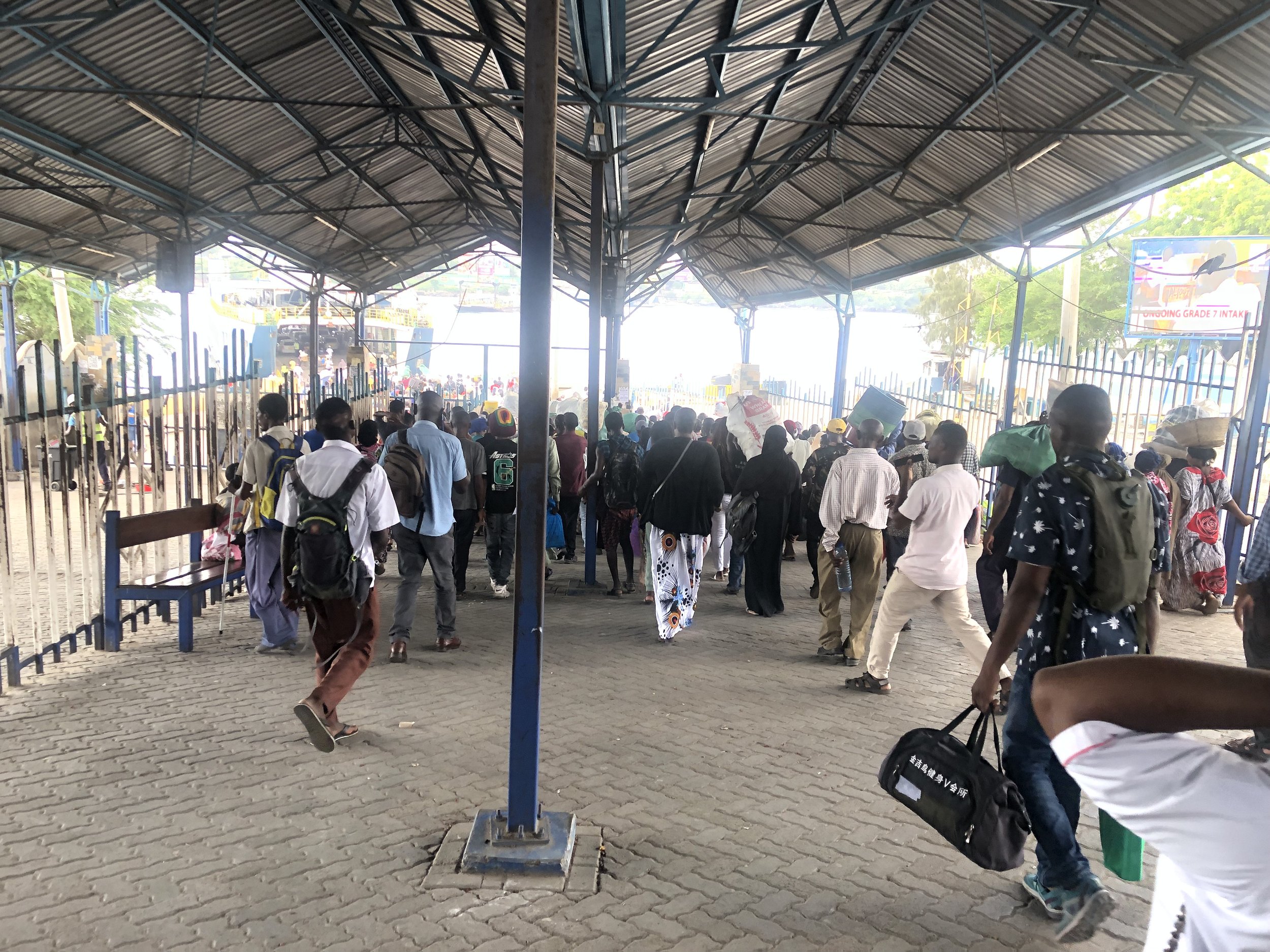
We both laughed, then he zipped up my suitcase and let me go. I walked into a large rectangular area with benches that were being quickly filled up. People had bags full of fish, beans, and clothes to sale on the other side of Kilindini Harbor. A woman walked by while gracefully balancing a large green sack on her head. A teenaged boy pulled up on his bike. A mother and father sat down with their two boys. The males in that family had clearly come straight from the barbershop because their lineups were immaculate. The people kept arriving. Each and every one of them had business to attend to on the other side. All of them moved with the familiar mundanity of a morning commute as it was about 9:30am.
I’m certain that they saw diversity in one another. I’m sure they could determine tribal affiliations by body type, gait, or skin tone. They could probably tell who was from the countryside and who was from the city based on accent and attire. Perhaps they could decipher who was formerly educated versus who had been working on a family farm their entire lives. I could not figure out any of these things, nor did I try to. All I saw was Black people and all I heard was the intermittent sounds of a soothing African tongue that I did not know how to speak. I was calmed by not being able to understand sentiments that might ruin my day. I was unaware of who was gossiping, who was cursing, who was being offensive, or who had a different political ideology than I do. I was blanketed by my obliviousness. I was comforted by what I did not know. Then we began our descent.
It was time to be loaded onto the ship which was at the bottom of a cement hill. I walked in synchronicity with the people of Mombasa. I was in the middle of the crowd, in a country in Africa, headed into the bottom of a boat. I thought about the middle passage—the indescribably brutal tragedy that ripped my ancestors from the continent and forced them into chattel slavery for centuries—but this was not a kidnapping. This was a reconnection. This was an initiation ritual. This was a baptism into a culture that had the power to redirect my spirit. I was being reunited with everything that had been lost. I pulled my luggage behind me onto the vessel, and I carried my backpack like a thousand burdens on my back. I did not stop walking. I did not speak at all. Even when asked a question in Swahili I just shook my head, no. I did not want to speak English. I did not want to be an American. I did not want to be an individual. I wanted to be at peace. I wanted to be whole and move within a body of people striving toward a singular destination. As I found my position on the ship, I looked up to my left and saw black people going up the stairs to the next level. I was surrounded by the Kenyan people—my people, whether they knew it or not. And as the powerful motor of that ferry propelled the entire lot of us across the water, I knew that I belonged. And I knew that I was safe because everyone was far too preoccupied with their own bags to be concerned about taking mine
I understand the “cycle of violence” that claims the lives of too many Black men. I understand it almost as a cliché at this point in my life. It’s an issue that has been going on well before I was born and reached a peak in my childhood which was in the early to mid 90s. “The cycle of violence” as a term is now only relegated to community activists, local politicians, and the families of homicide victims on the news. They shout it out in front of cameras while on the campaign trail or as they grieve the lives of their lost loved ones. The television audience is dismayed up until the very second that the next news story comes on about inflation, or a restaurant shuttering its doors, or a heroic dog–then it is immediately forgotten. Nothing ever happens in terms of changing the mindset in the hood or centering the problem for long enough for it to actually be solved. We just go on about our evening as if the perilous life of Black men shouldn’t be a major concern in our country. I tend to burry the pain of living in a world where I am most likely to be killed by another Black man, deep in my subconscious mind. I know it and I see it, but I try not to think about it. However, the circumstances surrounding the death of Philadelphia teen Noah Scurry has made me think about it a lot.
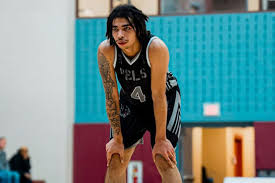
It came up on my YouTube algorithm that a 17-year-old basketball star had been gunned down in the streets of North Philadelphia. It gained national attention only because he was a talented athlete and therefore supposed to be protected from young killers in the streets. The story was told in a manner designed to demonstrate how truly depraved the Black underworld has become. This innocent kid with a bright future, only months away from making it out of the hood was gunned down as he prepared to be driven to school by his mother. What kind of a person kills a teenager in front of his mom? And not just any teenager, but a basketball player!
Noah was described as exceptional by the school district spokesperson Monique Braxton. He reportedly had the highest SAT score in the school and was an outstanding student. The more they reported on his good deeds the more savage the young Black men who presumably killed him appeared to be. “No one gets a pass. Anybody can get it. Kill them all. Make they mama’s cry.” Had to be the mantra for these urchins. But then the streets started talking, and they were saying that Noah Scurry AKA Joker was not innocent but instead he was very active in street life.
Social media has deprivatized all hood conversations. The era of having to be affiliated with a particular neighborhood in order to know who is committing robberies, who sells weed, who pimps, and who’s a killer is over. Now it’s all in online. There are YouTubers who cover hood politics in every city across the western world. And if the video has any inaccuracies, then people from that neighborhood will make corrections in the comments. To this point, I have never actually been to Philadelphia but in the days after the murder of Noah Scurry on January 14th, 2025, I felt as connected to the Philly streets as Meek Mill and Beanie Sigel.
Scurry, in addition to being a high school basketball player, was a rapper named JokerOTV. The day before he was killed, he had put out a rap video in a joker mask holding a gun talking about people that he had allegedly murdered. The Vlogs began to say that one of the people who Scurry killed was the son of beloved podcaster and former rapper Gillie da Kid (which was recently confirmed in an interview with Shannon Sharpe). This entire case has been extremely difficult for me to process. Indeed, it has kept me up at night. Even as the story is dying down in the blogosphere, it hasn’t relinquished in my mind. Scurry had to be 15 when he allegedly killed Gillie’s son. He was skilled at basketball, and he paid enough attention in school to do well on his SATs but neither of those things were enough to keep him from becoming entrenched in a criminal lifestyle. It was confirmed that he had been shot and per his own admission (to the extent that one can accept rap lyrics as truth) he had shot people. The answers, it would appear, are not the answers. If school and extracurricular activities can’t save us, then what can? And why would the school district release a statement that depicted Noah Scurry as an angel when there was so much evidence that confirmed he was indeed human. He was as susceptible to the gangs in his community as anyone else. He was as tainted as we all are. He was misguided, as youth and even adults tend to be. He was trying to figure it out, but he got it wrong–all wrong. Now he lay in his casket, reunited with the Earth. His death will beget more retaliations and more trauma.
We are all diseased. We don’t show our symptoms every day, but we are still terminally ill. The life and death of Noah Scurry has caused my sickness to flair up. It has reminded me that as hard as I have worked to become educated and somewhat successful, it really has more to do with luck than my ambition. What if I would have gotten shot as a teenager? Perhaps that would have caused me to hit the streets with all of my might and with no compassion or regard for human life. What if I saw someone get blown away as a young child? What if I had an abusive father and an emotionally unavailable mother? What if all of my uncles were in prison? What if my best friends started committing armed robberies and begged me to come with them? What if I got jumped by a group of boys from a rival neighborhood for no reason? Would I ever be to forgive them? I don’t know how many of these things happened to Scurry, but I know that even though we grew up in similar environments he was affected by it in a way that I never have been affected. Noah Scurry did not live long enough to find his purpose or to seek redemption. He did not even live long enough to go to his Senior Prom or graduate from high school. I stay up at night thinking about Noah Scurry. I wake up in the morning thinking about JokerOTV. I don’t know what could have been done to save him and that haunts me. It haunts me that we still don’t know how to stop the cycle from continuing.
On November 13th I arrived at AfroTech in Houston, Texas. The energy was absolutely palpable. It was young, Black, and positive. In the name of transparency, I was much more enthralled by the Afro than I was the Tech. There were plenty of people vibing, networking, and being gorgeous. I did an interview with Bay Area journalist Reyna Harvey. I think it turned out pretty well. What do you think?
That was a G move. I can’t think of any other way to say it. If what is being reported right now holds to be true then Donald Trump is a certified gangsta. And I mean that in a very hood sense. I mean that as a superlative. I don’t mean it in the sense of him possessing political documents in his home or paying a prostitute from the wrong stash.
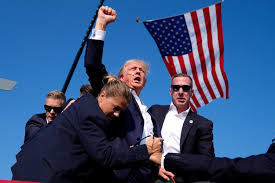
Donald Trump the narcissist, the egomaniac, the bully, the blah-blah-blah. Man listen, what he did on July 13th was hard. He was grazed in the ear by a bullet from an Ar-15. Had the bullet landed four inches to the right then his brain would have been on the floor of that stage, but it didn’t. Instead it streaked past his ear and he was tackled by secret service agents for his own safety. A few short moments later they got back up on their feet and escorted him off the stage, and with blood streaming down the right side of his face, he put his fist in the air and the crowd went bonkers. A couple of seconds later he did it again and they chanted “U-S-A! U-S-A!” I felt a rush of ice water flow through my veins when I saw this, and then I stood up straight. I was with him. Me, the man that did not vote at all in 2016 and voted for Kanye West in 2020. Me, the man that hates the U-S-A chant and refused to shout it in 2001 after the twin towers fell, and on the night that Barack Obama was elected in 2008. I do not endorse politicians and I very rarely do patriotism, but yesterday I found myself doing a little bit of both. For this incident conjured up a palpable sense of nostalgia in me.
When I was in primary school my cousins and I were playing football in my aunt’s yard on 55th Avenue in East Oakland and somehow the ball kept going over the neighbor’s fence. Her neighbor was a mean drunk named Stanley. He hated kids and he hated life. And he especially hated his life when me and my cousins, my aunties, my uncles, and my grandmother would all gather at my Aunt’s house for a family dinner. He begrudgingly threw the ball back to us the first time and then the second time it went over he refused to give it back. My older cousin, seeing how distressed we were about the ball, decided to hop the fence and get it for us. Stanley didn’t like that. So when he saw my cousin jumping over his fence from his window he went into his house and got his switchblade. He walked with vindictive intention toward my cousin.
He was one foot away when he flicked open the knife, and said;
“You went on my property mutha fucka?”
My cousin got in his karate stance and quickly retorted;
“If you gone stab me then stab me.”
We all circled the commotion then my cousin repeated himself with more confidence;
“If you gone stab me then stab me!”
Stanley wasn’t ready for this. A few of my aunties screamed; “Oh my god!” Then Stanley slowly retreated towards his house. “Yeah mutha fucka.” He said as if he had actually done something, and he went back inside. My cousin was 15 years old at the time and I was about six, but for the rest of my life I will never forget the moment when I realized that my cousin was a G. He wasn’t afraid to die. That’s what’s at the core of the gangster identity and that’s what Donald Trump exhibited last night. His defiance spoke to something very primal in me. The part of me that respects the inner savage in someone else. I saw into the soul of Donald Trump and it said “You gone have to kill me, because I’m not going to cower.” That’s hard. That’s gangsta and I don’t care what anyone says. I have to respect it.
My mother never wanted to come to California. It’s this simple truth that has shaped the way that I look at my state, the way that I look at the history of black people in this country, and the way that I look at the idea of integration. It’s also shaped the way that I look at my mother, and even the way that I look at myself.
Her story starts in Fort Smith, Arkansas–a very white town with a few small but fully self contained colored sections. She was raised by her grandparents. My great grandfather was a barber, a preacher, a porter on the Missouri Pacific Railway, a handyman, and an architect…well an architect in a very southern way. Meaning, when more of his grandchildren began to move in and the house needed to be expanded then he would be the one to build the extra room–by himself. No contractor, no approval from the city, no blueprint, no workers. Just a man that saw that something needed to be built so he built it. He was 6ft tall, prideful, and domineering. My great grandmother, on the other hand, was a domestic worker at the Goldman Hotel in downtown Fort Smith. She was 4 feet 11 inches tall, everloving, and very sweet. Oftentimes too sweet for my great grandfather’s liking.
“I don’t know why you let them people talk to you like that,” he would yell at her after she told him something that happened at work. And she would take his scolding lecture just like she would take the verbal abuse from the white folk at her job. He made her just a little harder while she made him just a little softer and together they provided the perfect environment for my mother, Evelyn, to thrive.
My mother was a phenomenal student and a stellar athlete. She won the physical fitness competition every year in grade school. She played the clarinet in the marching band. She was on the softball team and she was a straight A student. She had four siblings that she shared a home with. The rest of her younger brothers and sisters lived with her mother and stepfather in California. Of all the children though, my mother was the most gifted academically. She would be the first person on both her mother and her father’s side of the family to attend college. My mother had been elected as the student body vice president of Lincoln High School at the end of her sophomore year. Which meant she would serve her term as VP of her junior class and then as a Senior she would automatically be selected as student body president of the entire school.
Her term as president of Lincoln High School would have been the pinnacle of a brilliant k-12 academic career. It also would have been a source of enormous pride for the family. Lincoln High School wasn’t just an institution, but it was the hub of Black Fort Smith. It was the location of bake sales, talent shows, fish fries, community meetings, and football games replete with scintillating halftime performances by the band. To say that your grandbaby, or your sister, or your brother, or your daughter, or your son, or your niece was the President of Lincoln High School was almost like saying you’re related to the mayor. You had clout. It meant that your family was going places. As a grown man I can see how elated my mother must have been when she won that election. Her radiant smile and glowing brown skin must have lit up the school everyday until summer break. Unfortunately, it would be that summer that she would receive the news that would ultimately dim her light and rearrange her entire Universe. The year was 1966 and Governor Orval Faubus had decided that it was time to enforce integration in the state of Arkansas. His strategy in most municipalities was to close down the Black schools and bus the Black students to white schools. This meant that Lincoln High School in Fort Smith would be no more. My mother was to be sent to the previously all white Northside High School. An atmosphere that would be hostile and repressive.
My great grandparents knew that my mother wouldn’t be allowed to participate in the band, she would not have been placed in honors classes, and she most definitely would not be student body president due to her blackness, so they decided to send my mother to San Francisco to stay with her mother, her stepfather, and her younger siblings.
(My mother standing in front of what once was Lincoln High School.)
When I asked my mother what went through her mind when she was told that she would be moving to California she responded, “I braced myself to roll with change. I knew that the change would be greater than anything I had ever experienced.” Then I asked her if she cried,” and she said “Nope.”
She didn’t weep. She didn’t become lethargic. She didn’t rebel. She joined the band at Mission High School in San Francisco. She played softball. She was enrolled in honors classes, and was ultimately accepted into UC Berkeley. While at Cal she met a law student from Covington, Tennessee. They fell in love and had three children, the youngest of them being myself. Eventually the family moved to Oakland where my siblings and I were raised.
As a kid we used to beg my mother to tell us stories about her childhood in the South. This normally took place when it was time for us to go to bed and we wanted to stay up just a little longer. More often than not my mother would oblige. Her face would become luminescent as she reached back into her memory into the time in her life before she caught that cheap Continental Trailways bus to San Francisco. Before she was ordered to be integrated into an institution with poor whites who, if they knew nothing else they knew that they were above her. She would conjure up stories from a time when her grandparents who raised her were still alive. When her little brothers and sisters and mother were in town for the summer. When her village was complete. When part of her chores would be to wring a chicken’s neck and she learned the hard way not to befriend any of the livestock because one day your little pet would be on your dinner plate. She would think back to when they would ride pigs and hunt squirrels and they would be fist fighting each other one day and cooking for one another the next. When my oldest Uncle was a star running back at Lincoln High School and at every game my mother would awe at the precision, discipline, and artistry of the marching band. She couldn’t wait until it was her turn to represent that most cherished institution.
As the movie played out in her head she would smile and we would laugh hysterically as we sat Indian style on the dining room floor. I envisioned all of her stories in black and white. As she told them I thought about I Love Lucy and Leave it to Beaver. They seemed to speak to a classic era of love and simplicity. And she spoke with a palpable sense of nostalgia that stood in direct contrast to everything that I was learning about the South in school at the time. My mother had never seen a lynching or a crossburning. She had never been sprayed with a water hose and had never seen a Klan rally. She had never run home crying because a little white girl didn’t want to be her friend. She talked about her little pocket of the South as if it were the safest place in the world. As if it were nurturing and healthy. My mother would lose track of time and we would stay up over 30 minutes past our bedtime listening to her stories. She never wanted to come to California. She never wanted to leave the South. This was always very evident. And that’s why I always questioned the videos of the Black people who exposed themselves to physical violence and abuse in the name of integrating a lunch counter. This is why I couldn’t quite understand how a black parent would willingly send their 6-year-old child into the lion’s den of an all white school without any administrative support or any other child who looked like them to talk to, in the name of progress. We had our own schools and our own restaurants. Our own dreams, our own ambitions, our own bands, our own softball teams, our own scholars, and our own achievements that existed apart from the white establishment. But yet we have been conditioned to celebrate the sacrificing of our business districts and the traumatization of our children in order to live an existence as eternal dependents begging for entry intothe house of a man who hates us.
I love the state of California as does my mother. We love the Redwoods, the wine, the hills, and the Pacific Ocean. I would be remiss, however, if I did not say that this love was forced by a political order that was recklessly implemented with a flagrant disregard for the development of black society. My mother never wanted to come to California, and she should have never had to.
Ghana feels like the whole sun. It looks like a whole tree. And it tastes like a whole cake.
At some point when I was there I realized that I had only been given pieces of what’s essential to my being, and I had made the best of it, but in the pit of my soul I felt like I deserved more. I always thought that there was something else. Well at the market place outside of Kumasi in the Ashanti region–I experienced that something else.
There were probably no less than 10,000 people shopping for everything from cow heads, to backpacks, to ice cream. There was a buzz both inside and outside of the mall that felt like downtown New York City at 2:00pm in the middle of July.
There were men getting haircuts, women getting weaves, teenagers getting new cases for their cell phones, hundreds of babies being carried on the backs of mothers who were vending and mothers who were shopping as well. And all of them. 100% of them, were Black. It was very overwhelming for me, a Black man from a city that is 25% Black, from a country that is 13% Black, and a state that is only 6% Black.
As I sunk further into my thoughts and began to be less verbal with my tour guide, a mighty revelation began to bubble over the cauldron of my being: I AM NOT A MINORITY. I am not a tree without roots, I am not lost in the wilderness of North America. I am not living in a small ghetto allowing the dominant class to define what it means to be me. I am a drop of water in a beautiful black sea. I am being baptized and cleansed from a lifetime of geographic limitations. I am not relegated to a neighborhood, or a part of town. The entire world is mine. I may travel as I please, I may think as I please, I may do as I please. I am not a part, I am whole. I represent one whole mind, one whole body, and one whole soul, working together to liberate my sullied perception of my place in the universe.


 ghettosun