No moment of silence will be quiet enough. No video will be somber enough. No editorial can be reflective enough to understand the suicide of Marshawn Kneeland. There will never be closure. There will never be understanding. We can only make inferences as to how a 24-year-old man could be so disenchanted with the world that he would kill himself only days after scoring his first NFL touchdown. Every little boy in America at one point or another dreams of scoring an NFL touchdown but Marshawn actually did—in real life. But alas, joy is only temporary. The feeling of euphoria comes down fast and then as quickly as you fall on a blocked punt in the end zone, you’re being pursued by police officers for a traffic violation. That’s when all the hatred, all the feelings of inadequacy, all of the trauma, and all of those insecurities ravage your consciousness at once. And you realize that you exist only in the space between how you thought success would be and what it actually feels like. It is in this chasm that Marshawn put a bullet into his 6’3 268 pound frame and ended all uncertainty.
I don’t pretend to understand. I will never actually get it. I just know that I once felt like an unforgivable burden, like a stain on my entire family and reasoned that if I were gone—If I were to leave this place then everyone else would be so much better off. Thank God I did not own a gun before my prefrontal cortex had fully developed. Thank God I had no fame. Thank God I was completely broke. Thank God no children looked up to me as if I was a hero when I was only 24 years old. Thank God millions of men around the country didn’t think that I had actually made it. I wouldn’t have been able to lie to them for that long. I wouldn’t have been able to lie to myself. For what does it mean to truly make it? To make what? To make money? To make the team? To be on nationwide television and still feel hollow. To smile through an entire interview yet feel like dying the whole time. Everyone feels like they know the formula for happiness, and although it may vary from person to person, money is always a part of the equation. No amount of money can make a person value life. There is no intervention that can save a person who is determined to kill themself. There is no reason, no rationale, no logic in this decision. All that young man knew was that he didn’t want to hurt anymore. And I just hope that he’s no longer in pain.
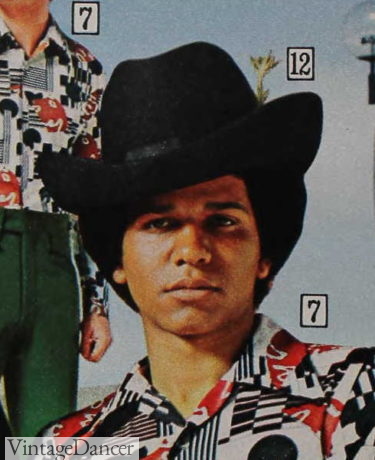
A beautifully spirited, slender light complexioned man with a Camel Menthol in his mouth and a pimp hat on his head helped raise me. In between his relapses he was the coolest thing walking. But when he did relapse on crack, he didn’t go to a rehabilitation center in Sonoma County, they sent his high yellow ass to San Quentin on a parole violation. This was the year 1989, way before Hunter Biden made the image of the family crackhead a brilliant yet flawed and ultimately sympathetic figure.
My mother’s family came straight from Arkansas to the Filmore district as teenagers and then eventually moved to East Oakland where they could afford to raise their own families. My Uncle, stubborn as he was, refused to ever claim The Town. He never lost his city energy. His words came out a half beat faster, and he kept a determined gait. Unlike the average Oaklander who was much more chill, he always walked like he had somewhere important to be—even when he was going nowhere.
We would get on the BART Train at Coliseum Station and get off at Embarcadero. He took me on the bus downtown with him to run errands and we went to Candlestick Park to watch the Giants play. The lineup starred Kevin Mitchell and Will Clark. It was the year of the big earthquake. It was the year the Giants got swept by the A’s in the World Series as well, and all my classmates playfully teased me because I was raised to root for San Francisco. I tried to defend my team like my uncle did. He always stood tall. He never lost a verbal spat to anyone. He spoke to me—which in retrospect is very odd—like I was a man, but he looked after me like I was a child. He helped me tie my shoes while telling me about hoes he used to pimp. It was so bizarre.
Everything in the 1980s was really strange. I don’t think we, as a society, had established what inappropriate truly meant. Indeed, it was the last generation where children were able to buy cigarettes for their parents. It was totally normal to see four kids and a dog in the bed of a pickup truck doing 70 mph on the 580 freeway. And we actually thought the movie Who Framed Roger Rabbit was suitable for kindergartners because it had cartoons in it. Have you seen Jessica Rabbit’s titties popping out of her dress? It was wild fam. But anyway, back to my uncle.
I saw him when he had $1,000 in his pocket and wore $1,000 Gator dress shoes on his feet. I saw him when he had tickets to the Giants game, and when he had enough bread to send me and my cousins to the store with a $20 bill to get him some Camel cigarettes and let us keep the change. When he relapsed though, he became the invisible man.
The television and all of the furniture went missing from my grandmother’s house one day while she was gone, yet no police report was ever filed. We all knew what happened. He stopped coming over on Sundays to eat with the family after church. He even stayed gone on his own birthday. The grownups spoke around him on Holidays. They let his shoe collection get dusty in the backroom of the house. I suppose we all prayed for him, but we kept our prayers between ourselves and God. We refrained from speaking his name out loud, except for a few of my other uncles who said that they were going to beat his ass when they saw him for stealing from Mama. I knew they didn’t mean it though, and I’m pretty sure they knew it too.
One overcast Sunday afternoon while the family was over my grandmother’s house the phone rang, and she answered it. “Yes, I accept the charges.” We all looked at her from our respective spots in the kitchen. And we watched as our strong black matriarch began to cry.
Maybe your version of happiness looks like a very well decorated prison cell to someone else. The acquisition of corporate wealth, along with a spacious condo that has a killer view, an investment portfolio, and an electric Audi in the garage may be totally unappealing to a free-spirited person. Is it conceivable that all a woman may need to find joy in life is a used car, a gym membership to take showers, and a few dollars in her pocket to buy food? For that is the life of 90s R&B singer Dawn Robinson from the hit groups En Vogue and Lucy Pearl.
She recently put out a YouTube video in which the stated that due to a series of unfortunate events or “life was lifein” as they say, she has been living out of her car for the past three years. The tabloids and blogs picked up the story immediately and used disparaging headlines that spoke about her like she was a charity case. Headlines such as “Dawn Robinson has been living out of her car for three years” and “Dawn Robinson offered job by her ex-husband amid homelessness” are everywhere. First off, who the hell wants to work for their ex-partner? But I digress. What struck me more than anything else is that none of these articles suggest that Dawn is actually happy. After watching her video, however, one can easily conclude that she is.
She divulged that she didn’t want to be a burden on her co-manager who had put her in a hotel room for eight months. She no longer wanted to live with her mother who she said had become angry and hostile toward her. So she took to the road, inspired by van life videos and the lives of legendary soul singers such as Marvin Gaye who had once lived out of their vehicles as well. She made a joke about being able to keep up with her hygiene by taking showers at her gym. “Just because I’m a funky diva” she said alluding to the title of En Vogue’s first album, doesn’t mean I’m funky. Her face looked unburdened, vibrant, and full of optimism. She made this video while on a very necessary spiritual journey in her life. She’s trying to determine what’s real and what isn’t. She’s totally doing away with the idea that people’s perception of her should mold her existence. She no longer cares what people think about her, and I believe that this is exactly why so many people will crucify her for her social sins. For if the mob of social reinforcement cannot bully people, and especially women, into conforming then that totally disrupts the natural order of things.
We need to be able to tell people how to dress, how to think, how to live. We need to be able to enforce our ideas of success, what dreams are appropriate to have, and how celebrities should present themselves. Dawn must always move in a way that inspires awe in her fans. She must wear makeup, be fashionable, and look like she achieved the dream that almost every single American is in pursuit of—and that is to be famous. She can’t be sleeping on the side of a road in the Mojave Desert no matter how beautiful the scenery may be. She isn’t allowed to take a hot shower at Planet Fitness, on the contrary, she’s only relegated to the bathroom in her condo in the greater Los Angeles area, or New York, or Atlanta. Because we don’t like the optics of our celebrities looking like normal struggling people—even if they are. We don’t like it because it presents the notion that heaven may not actually be heaven. Perhaps it’s just like Earth but with a much longer stay or, even worse, perhaps it doesn’t exist.
But if heaven doesn’t exist then why are we intentionally falling downstairs for likes and views? Why are we taking pictures as we tote pistols and show off the jewelry that we got in a high-profile robbery that we committed two days ago? And why are we posting these incriminating photos online? Why are we taking vacations for the sole purpose of gathering content to upload on our social apps? Why do we try to sneak into the shot when we see that Channel 5 News is doing a story in our neighborhood? Why did that man release his first rap album on sound cloud at the age of 41? Why does that teenage girl want to be an influencer when she grows up? We are literally willing to die to be famous, and we actually do! There are dozens of selfie deaths every single year.
When a person is famous then they can’t be still trying to figure it out. They can’t experience the same hardships as us folk down here at the bottom. We have no empathy for people like Dawn Robinson who has the audacity to move about the world as if she is a normal human instead of being a fixed object in the sky like the star that she is. We only have sympathy for her, because having your celebrity status die while you’re still alive must be the worst thing a human-being could possibly go through. There is no satisfaction in being an average everyday person. There can’t be. This can’t be as good as life gets. In America our celebrities are like Gods in human flesh. We must always worship them. Needless to say, Dawn has rendered herself impossible to worship. And what a terrible sin.
In Ghana everyone drives crazy. But it isn’t crazy to them, it’s only crazy to the outsiders. In Accra there is big city traffic with very few traffic lights. There are roundabouts full of motorbikes, buses, taxis, vans, and Hyundai’s–yet somehow everyone is able to successfully merge. I have yet to see one accident. People always honk; however, they don’t lean on the horn for thirty seconds as the drivers in Chicago and New York do. It’s more like a courtesy. There is nothing manic about the way people drive in Accra. The people understand the basic fact that the road belongs to everyone.
Merging in Accra feels very dangerous if you’re sitting in the front seat of a Bolt. Your driver accelerates into oncoming traffic. He seemingly lurches right into another vehicle, and you brace yourself for an accident that never happens. He never makes contact with the other car. The other motorist breaks at the very last second. Miraculously, the other driver doesn’t put his head out of the window and scream something profane about your driver’s mother. Nor does he take out a pistol and start shooting. He just yields. That’s it. It always happens that way. I’ve seen evil looks and aggressive horn taps, but I haven’t witnessed any road rage, and I haven’t seen any accidents at all. This, in one of the most congested cities in West Africa with potholes one meter deep, very little white paint on the asphalt to indicate lane separation, and almost no stop signs. The Ghanaian people just make it work. I don’t know if car insurance is even a thing here. If you order a car from the ride sharing app called Bolt, then there is a 90% chance that the seatbelts in your car will not work. All you have in terms of safety are faith and prayer. The drivers though–to their credit–always get you to your destination. They must maneuver through motorcycles with entire families on them including three small children. They turn down blind backroads with pedestrians, stray dogs, and other vehicles only alerting their presence with the sound of their motor and two rhythmic honks of the horn; “Beep, beep.” Everything is harmonious. The drivers of Ghana loudly speak the language of their commute even if you can’t comprehend it just yet. They demand that you learn it through immersion. There will be no accommodating and no negotiations.
Bipping is a post pandemic phenomenon that feels as indigenous to the Bay Area as sideshows and Mac Dre murals. I’m aware that it happens in other places but members of the criminal underworld in Oakland have mastered it. As a matter of fact, if it were a college course then it would have to be taught at either Cal State East Bay or UC Berkeley. The art of breaking into cars and stealing all valuables inside of it in 8 seconds or less, taught by Professor Lil Hyfee/Sociology Department/3 units.
Celebrities like Alex Rodriguez, B. Simone, and Lyfe Jennings have all been victims of this crime while visiting the Bay Area. And tens of thousands of folks just trying to make a living, get their cars hit up every single day in The Town. People like me.
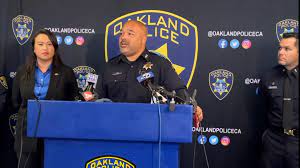
Last summer I got my car window broken and I literally had nothing inside my car. I caught them trying to pull down my backseat and get into my trunk. I screamed, “Yooooo!!” and the wiry teenager got into an awaiting car and they drove off. I felt frustrated, violated, and enraged. I had to pay $475. The vandals were off to the next car with no consequence. That was over a year ago. Now thieves have gotten even more brazen, but how? Why? Don’t they face any repercussions for doing this? Well, according to Assistant Chief Tony Jones as well as the rest of the Oakland Police Department, the answer is No.
In a video recently uploaded to X, he stated in what appears to be a town hall meeting, that because of Prop. 47 if they catch someone in the act of breaking into a car and that person has an ID then they must cite them and let them go. But San Francisco public defender Jesse Hsieh rebutted this claim. He said that smash and grabs and car burglaries are indeed felonies and he gets several cases for this crime. He went on to say that he was trying to figure out how the same crimes are felonies in San Francisco but citable offenses in Oakland. Then there was silence. Finally, Assistant Police Chief Tony Jones says, “Well maybe I misspoke.”
This was one of the most embarrassing exchanges I've seen in this body, but I have no doubt that if Hsieh were not there with the current construct of the Commission, this would not have been clarified for the public, with attendant conclusions–OPD is not pursuing these crimes pic.twitter.com/Lnl8xnSRnE
No potna! You did not misspeak. The Oakland Police Department is intentionally letting people rob The Town blind. Admit that you all are still harboring a lot of resentment from the Black Lives Matter/Defund the Police Movement. And now you want to bring every activist and George Floyd sympathizer to their knees for being recalcitrant. Once we beg you for forgiveness (a process that some have already started in the media and in city council meetings) then you will be able to hire an abundance of police, change laws to arrest more people which will ultimately lead to more prisons being built, and then you all will be able to get back to aggressively shaking down innocent Black people who look “suspicious,” and there will be no organization powerful enough to chastise you because all you’ll need to say in your own defense is; “You see what happens when we let them run amuck. Let us do our jobs or the mass bipping will come back tomorrow.”
And I know all of this may sound like a conspiracy. I don’t deny being a conspiracy theorist because, as a wise person once said, “The only difference between a conspiracy theory and the truth is time.” The fact that a city such as Oakland situated just north of the Silicon Valley, right across the Bay from San Francisco, with an International airport, a major league baseball team, a rich legacy, and over 420,000 residents can decide to decriminalize car burglaries is beyond absurd. We should all be very concerned about our Assistant Police Chief’s comments and how they have led to a golden age for Bippers in Oakland.
About a week ago I sat down with the incomparable young South African scholar Dr. Pedro Mzileni. This conversation resulted in an exhilarating dialogue about the Revolutions that are taking place in several African countries right now. Check out the video below to see exactly what I’m talking about.
We woke up to Alice Coltrain playing on my Spotify. I rolled over to your side of the bed and as Alice played the piano I played with your FUPA. You very sweetly told me to stop–I did not. Instead, I laughed. You tried to pry my fingers away. I leaned in to you. I was the big spoon. I turned you around to kiss you. You said your breath stank and covered your mouth. I said, “Mine too. Why you trippin? I like that.” You said that I was nasty, but you let me kiss you anyway. This is how we spent the morning. In and out of consciousness and in and out of one another while Alice played the harp. And thank god it wasn’t vinyl because neither one of us would have been able to exercise the restraint necessary to get up and turn the record over.
The Marvin Gaye sample was enough to have me locked in. Every Black person in America that was raised in a traditionally Black household knows the sultry masterpiece that is “I Want You.” We’ve listened to it in our uncle’s tape decks, and during Sunday night oldies on the radio station. We’ve had it playing in the background as we spoke to girls on the phone in our sexy voice as adolescents. But then Kendrick begins rapping, and it feels even more reassuring. He punctuates every syllable with a hand gesture, a facial expression, rhythmically rocking back and forth as he does his OG dance. His eyes stay averted from the camera. He spasms with each bar as if reacting to a drug. The Marvin Gaye sample is his drug. We (his fans) are his drug–after all, he hasn’t spoken to us from his throne since “DAMN” was released 5 years ago. There is a red backdrop behind Kendrick that resembles a velvet curtain. He’s performing a one man show onstage. Incredible! I get it. Welcome back Kendrick.
That would have been enough. But enough is never the objective when it comes to a generational talent like Kendrick Lamar. He must have it all.
The first time I saw the video I blinked when I shouldn’t have. Because when I opened my eyes I saw the face of OJ Simpson rapping with dreadlocked hair. I screamed several profanities at the television. I leaned in toward the screen from my seat. I thought, “Is Kendrick trolling?” Why OJ? Why would he want to be provocative in this particular manner? I laughed while trying to figure it out. Then there was the deep fake into Jussie Smollet and it became bizarre. No cap! I got defensive. The Kingdom of Kendrick has no place for Jussie Smollet. The former Empire star who claimed he was attacked by white supremacist and still had the noose around his neck when police came to interview him does not deserve to be immortalized in a Kendrick Lamar video. The fake rapper who claimed to be the Gay Tupac in the immediate wake of that incident needs to be forgotten quickly. I did not approve.
Then he morphed into Will Smith and I understood the theme, but it wasn’t until the second time I watched the video that it came together for me. Somehow I had missed the most important quote in the entire visual; “I am. All of us.” The video is a highly stylized drone attack against cancel culture, especially when it’s levied out disproportionately against Black men.
The last cameo is that of Nipsey Hustle. Kendrick, a man from a Blood neighborhood, speaks from the perspective of Nipsey, a member of the Rolling Sixties Crips. Through Nipsey he speaks to Nipsey’s children andNipsey’s brother Sam. I became emotional as I saw this rendering of the deceased prophet. The man who literally bought his own block, and spent his entire brief career showing young black rappers the extreme importance of ownership. Nipsey has also been the recent subject of sex tape rumors and other salacious allegations by a Los Angeles gang member turned music manager named Wack 100. Perhaps one could argue, as tough as it may be, that Nipsey Hussle could have been on the brink of cancellation. Kendrick is a man who doesn’t go out of his way to stay hot in between albums. He doesn’t do a lot of features. He isn’t trying his hand at acting. He’s never hosted Saturday Night Live. He just makes really good music then disappears. He escapes into being a normal black man with exceedingly high intelligence and a deep devotion to his people.
Kendrick is an empath who expresses the pain of the world through classic albums. What Kendrick is saying in The Heart Part 5 is that he is not capable of letting his brothers and fellow entertainers be destroyed by a savage system run by sociopaths. He will not surrender Black men who have made mistakes to a justice system controlled by Europeans that have committed the most egregious transgressions in the history of the world. Kendrick will not leave his people to be eaten by wolves on social media because they made mistakes. For he is all of us. When we are cut, he bleeds. He places himself on the cross for us while everyone else celebrates when we are publicly humiliated, snatched out of our mansions, and made to crawl through town square on broken glass.
People recently cheered when Kevin Samuels was rumored to be dead. Then they celebrated when his death was confirmed. Black folks quickly removed the same R. Kelly songs from their music collections that were played at their weddings and senior proms because everything that he created was deemed to be toxic by the media. A few years ago The Cosby show was taken out of syndication because of the alleged misdeeds of Bill Cosby. When it comes to Black male creatives, society seems to be unwilling to separate their failings from their masterpieces. We aren’t given the same grace as Paul Gauguin, Woody Allen, or Roman Polanski. We are discarded. We are shamed. Our art becomes radioactive. Our legacies are forced into disrepute. And we are given to white people so that they may abuse us until the day that we die.
Kendrick is here to remind us that this is a practice engaged in by the weak. Strong civilizations don’t allow their enemies to discipline their criminals.For they understand the adage “I can talk about my brother like a dog, but if you ever disrespect him then we’ll have to fight.” Kendrick is saying that I am the greatest black man but I am also the worst. I am all of them and they are all of me. You can not come for them without coming for me. When you hurt them I cry. When you kill them then I die. You will not separate us. I am. All of us.





 ghettosun