Notes on Joe Rogan and India Arie

I like India Arie. Her Acoustic Soul album was the second album that I gave to my daughter. The Miseducation of Lauryn Hill was the first. India came into my consciousness as a black woman singing about going against the grain of the images that were being disseminated in the Jay-Z and Dr. Dre videos of that time. She wore her hair naturally, she did not show her booty, and she rode a bicycle. Everything that she did was rebellious even if she wasn’t necessarily trying to be. Now she’s gone viral for calling out Joe Rogan and Spotify on her Instagram and I’m kind of upset.

Just to be clear, I’m not mad at Miss Arie. She stated her position very well. She doesn’t like Joe, or any other white person for that matter, using the N word at all, and Joe has used it several times. She thinks Spotify is exploitative because they do not pay their artists very well. I get it. I’m cool with that. What I am mad at is the way she’s being covered by CNN, MSNBC, NBC, and ABC as if they care about her brand. It’s almost as if she’s a regular news consultant. Since when do they care about early 2000’s R&B singers? Did they touch bases with Sunshine Anderson and Tank on this particular issue? I mean come on now. 

Joe Rogan has used his platform to stand up against legacy news media lying to people in excess for going on three years now. Has anyone ever asked how every major news outlet has taken the exact same stance on Covid and the vaccine, even though it’s been the most divisive issue in modern history? None of it is genuine. It isn’t open ended and it’s extremely far from being objective. In essence corporate media is trash. The whole country has been looking for something else. And Joe Rogan, whether you like him or not, is that something else. It’s like when Puff Daddy and Mase ran hip-hop in the Shiny suit era then DMX came into the game like “Let’s take it back to the streets mutha f***a!” That’s what Joe Rogan is, but in a much more white way. He wanted to take it back to the Dick Cavett days when people actually had dialogue and debates about controversial topics and he did just that, bless his heart. The only issue is that he became too successful at it. His narrative began to bump heads with the corporate narrative, especially that of CNN and so they sought to get rid of him. CNN has lost almost half of its viewership in the same time that Rogan’s has doubled. Do the math. They want him out of there–period. And who do liberal pundits always lean on when they want someone canceled? Black people. 

Once a person is accused of being racist in the way that Rogan is now being accused they become radioactive. People no longer question the issues. Critical thinking is suspended. Everyone becomes reactionary and moves based on emotion. No one comes to publicly defend a racist unless they too want to be labeled racists, so the individual is left to fight alone and more often than not after several painful apologies, they lose. But alas, this fight is not about whether Joe Rogan is racist, it’s about free speech versus corporate domination. It’s about the loss of sheep in the fold of corporate media outlets which equates to the loss of money. It’s about Joe Rogan being the embodiment of a different kind of information not to be confused with MISinformation. And this is about the old guard putting him back in his place. This isn’t about blackness, this isn’t about racism, this isn’t about Neil Young, this isn’t about India Arie. We need to look through all of the distractions to focus on what’s really at stake and finally start having real conversations again. 
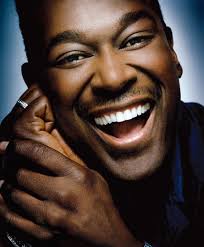
I used to hate Luther: A Black History Month Confession

I spent my entire young life hating the music of Luther Vandross. It bothered me that he smiled when he sang. Even when I heard his songs on the radio, I could clearly hear that he was happy. I always liked pain. Real pain pouring out of the mouth of another black man always comforted me. The sorrow of losing your lady (Otis Redding). The sting of living a second class citizenship (Sam Cooke). The trauma that comes from having to suppress your natural impulses, being addicted to drugs, and growing up in the slums (Marvin Gaye). Those were the men who I listened to at night while I tried to talk sexy to my girlfriend, hoping my mother wouldn’t get on the line and tell me to get off the phone. But never Luther.

Luther sang about heartache in a way that sounded downright bearable. I was too ignorant to appreciate the inherent happiness in his rendering of Soul music. His voice was always there but I never gravitated toward it, until I found myself in a state of confusion and depression. I had been intensely at odds with the mother of my child which therefore put me at odds with my child. I was in an empty kitchen with pictures of my kid on the refrigerator. I was in total despair as my Spotify playlist played in the background; “Don’t you remember, you told me you loved me baby.”  Luther sang a song full of sorrow but he was not downtrodden. He recalled the pain without living in it and somehow, the song which I thought was immensely corny in my younger wilder days, was getting me through my difficult time. And then I started back listening to his catalog. 

“Aunties” used to obsess over Luther. Big women that carried very big purses and had no less than three children were guaranteed to have at least one Luther Vandross tape and they never pronounced the “er” at the end of his name. He was always LUTHA! They adored him. Conversely, I abhorred him but now my first sign of being a mature man in his 30s was my willingness to admit to myself that I had been wrong. 

I had heard “If only for one Night” since I was a child but I hadn’t felt it until I was old enough to have a child of my own. It’s a song about a man trying to seduce a woman that he feels like he can’t actually be in a relationship with, for whatever reason. Maybe she’s married. Maybe he’s married. Maybe she’s devoutly Christian. We do not know. What we do know is that she’s afraid of something, and he’s afraid too. He renders himself completely vulnerable in the song. 

I never hear from you

And my knees are shaking too

But I’m willing, willing to go through

I must be crazy

Standing in this place

But I’m feeling no disgrace   

-Luther Vandross

He’s not begging as much as he’s illustrating the beauty of their potential lovemaking. And he means it. He sounds authentic, as if he isn’t running game at all.  In fact when I listen to other legendary black male singers, sometimes it sounds like they are seeking the approval of men for how they are communicating with women. For example; when Teddy Pendergrast shouts “TURN EM OFF!” in the song “Turn off the lights”, women like it but men can also respect it as well. It’s very dominant and masculine. It represents a certain aggression that men like to bring into romantic relationships. An aggression, I’ve been told several times,  that women don’t always like. But while Teddy is screaming Luther is releasing a single tear as he smiles nose to nose with your lady in a secret location plotting on doing forbidden things that you will never be made aware of. That’s the appeal of his music. Sistas consider him to be safe. There is no barrier between how the Aunties feel and what he says. There is nothing rough about “Lutha’s” voice. There is no depression. There is no angst. He is not overzealous or angry. He is calming. He is happy. He is soulful, and he is love. And I am honored to be at a place in my life when I can finally recognize that.